 How-to
7 Signs Your Roof Decking Is Rotten and What to Do
Quick Summary
Roof decking is the wood panel layer under your shingles, and you can tell it is rotten if it feels soft, crumbles, or has a musty smell. Check from the attic first, since rot often hides under intact-looking shingles. Press a flathead screwdriver into suspect boards: sound wood resists, while rotten wood lets the tip sink in.
- Always inspect from the attic first and never walk on a wet, steep, or weak roof.
- Rusty or stained nail tips poking through the decking are a strong sign of moisture.
- Readings above the dry baseline on a moisture meter suggest an active moisture source.
- Sagging or dips in the roofline mean the decking may be weakened and need prompt attention.
- Call a licensed roofer if you find widespread rot, sagging, or water dripping through the ceiling.
Table of Contents
- What Roof Decking Is and Why Rot Matters
- Common Causes of Roof Deck Rot
- Safety First: Inspecting from the Attic Without Going on the Roof
- Step-by-Step Attic Inspection Checklist
- Visible Signs from the Outside: Sagging, Dips, and Loose Shingles
- Distinguishing Rot from Other Roof Deck Problems
- How to Assess Severity and Urgency
- Repair Options, Repair Costs, and Whether to Repair Sheathing from Inside
- Frequently Asked Questions
What Roof Decking Is and Why Rot Matters
Last Updated: November 22, 2026
Roof decking, also called roof sheathing, is the layer of wood panels that sits directly under your shingles. It holds the shingles, supports the roof's weight, and acts as the first barrier against rain. When that layer rots, the whole roof is at risk, and most homeowners don't notice until a leak shows up inside.
Rot is a slow problem. Wood that stays damp for long stretches starts to break down, and the decay often hides under intact-looking shingles. Catching it early can mean a targeted repair, while waiting can mean replacing large sections of decking and possibly the shingles on top.
- Decking holds nails and fasteners that keep shingles in place
- Rotten panels lose strength and can sag or collapse under foot traffic
- Water that reaches decking can spread into rafters, insulation, and ceilings
Common Causes of Roof Deck Rot
Moisture is the main cause of roof deck rot. Water gets in through damaged shingles, cracked flashing, or worn seals around vents and chimneys. Once it soaks into the wood and stays there, fungi start to grow and break down the fibers. As the wood fibers weaken, roof water damage may also show up as stains or damp insulation beneath the roof.
Poor attic ventilation is another common culprit. Without airflow, warm, humid air gets trapped and condenses on the underside of the decking, especially in winter. Ice dams that push meltwater under shingles can cause similar damage along the eaves.
A common mistake is adding a new layer of shingles over an old leak. The new layer hides the problem while the moisture keeps working on the wood underneath.
Safety First: Inspecting from the Attic Without Going on the Roof
Walking on a roof is one of the most dangerous things a homeowner can do. Wet, steep, or weak surfaces are easy to slip on, and rotten decking can give way under your weight. For that reason, the safest first inspection is done from inside the attic.
Follow these rules before you start:
- Never step on the roof surface, especially if it's wet, icy, or steep
- Stay on the attic floor joists, not the insulation or the bare ceiling drywall
- Bring a helper who can watch from outside
- Stop immediately if you see sagging or feel the floor flex
- Call a licensed roofer if anything looks serious
Watch out: a roof board that looks solid from below can still be rotten on top. Don't assume the decking is sound because the attic looks dry.
Also consider a professional inspection. Contact Taylor-Made Roofing for a consultation on whether a repair or replacement makes sense for your roof.
Step-by-Step Attic Inspection Checklist
A repeatable sequence matters more than a quick glance. Work from the attic access point toward the far end, and inspect one bay at a time so you do not miss a section.
Before you start:
- Wear a respirator rated for mold and dust, safety glasses, and gloves.
- Use a bright LED flashlight or a headlamp; a phone light is not enough to see staining in the far corners.
- Bring a moisture meter if you have one, a flathead screwdriver, a notepad, and a camera.
- Confirm the attic has safe, stable walking surfaces over the joists; if the only path is across insulation or ceiling drywall, stop and call a professional.
The inspection sequence:
- Lighting sweep. From the access point, scan the underside of the decking in a slow grid pattern, top to bottom and left to right. Look first for dark stains, water trails, and damp spots, then for sagging or wavy lines in the panels.
- Moisture clues. Pay closest attention to penetrations: chimneys, skylights, plumbing vent pipes, and attic fans. Most leaks start at flashing and sealant failures around these openings. Check the decking within a few feet of each penetration.
- Fastener check. Look at nail tips that poke through the decking. Rusty, wet, or stained nails are a strong moisture indicator even when the wood looks sound. Note the location of every rusted nail cluster.
- Wood firmness test. Press the tip of a flathead screwdriver into suspect boards with light, steady pressure. Sound wood resists; rotten wood lets the tip sink in or crumbles. Test several spots per panel rather than one.
- Moisture-meter reading. If you have a pin-type moisture meter, take readings on the underside of the decking and on the rafters. Wood that reads consistently above the dry baseline for your area suggests an active moisture source, not just an old stain.
- Rafter and insulation check. Look for stained or soft rafters, compressed or damp insulation, and water marks on the attic floor. These often reveal a leak that has been running for a while.
- Documentation. Photograph every suspect area with a wide shot and a close-up, and note the location relative to the attic access, chimney, or a measured distance from the gable end. Date the photos so you can compare later.
When to stop: If you see sagging decking, feel the floor flex under you, or find widespread mold, stop the inspection and call a licensed roofer. Do not walk farther into the attic to get a better look.
Watch out: a board that looks solid from below can still be rotten on top, so do not assume the decking is sound just because the attic looks dry.
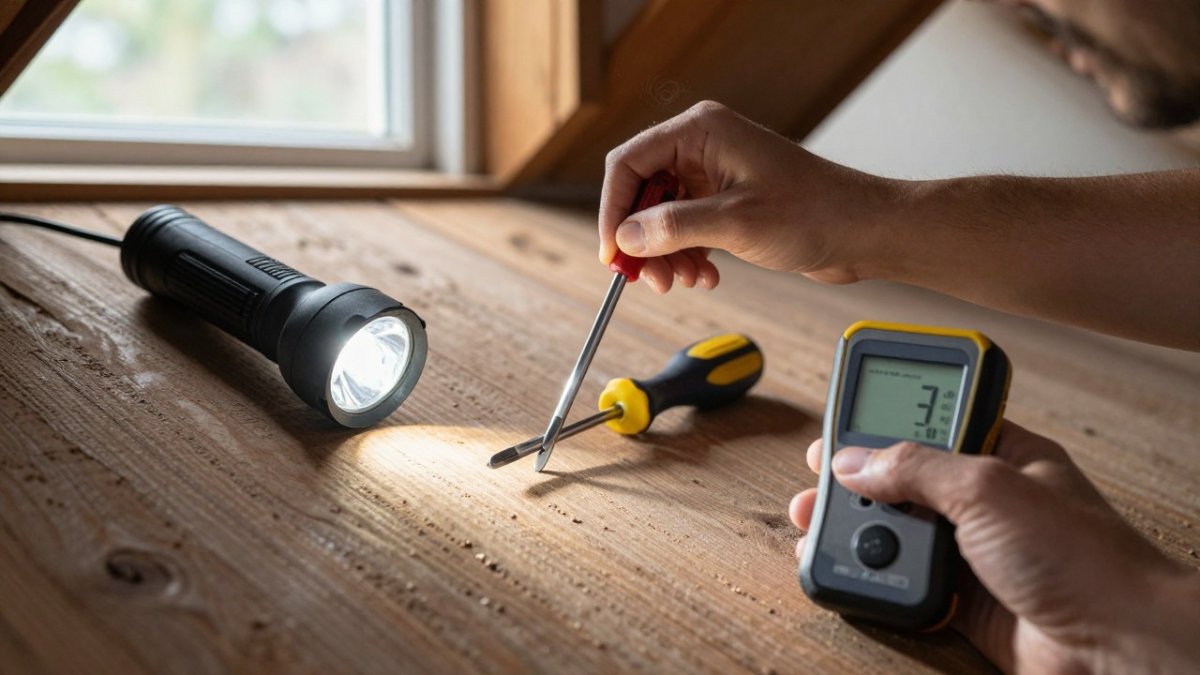
Work through these steps in order, from the attic access toward the far end, to catch rot before it spreads.
| Step | What to do | Note |
|---|---|---|
| 1. Lighting sweep | Scan the decking underside in a slow grid pattern | Look for stains, water trails, sagging |
| 2. Moisture clues | Check the area around chimneys, skylights, vents | Most leaks start at flashing and sealant |
| 3. Fastener check | Inspect nail tips poking through the decking | Rusty or stained nails signal moisture |
| 4. Wood firmness test | Press a flathead screwdriver into suspect boards | Rotten wood lets the tip sink in |
| 5. Moisture-meter reading | Test decking underside and rafters | Readings above dry baseline suggest active moisture |
| 6. Rafter and insulation check | Look for stained rafters and damp insulation | Often reveals a leak running for a while |
| 7. Documentation | Photograph suspect areas with wide and close shots | Date photos to compare later |
Visible Signs from the Outside: Sagging, Dips, and Loose Shingles
Some warning signs show up on the outside of the house. Stand back and look at your roofline from the ground with a pair of binoculars. A roof that sags or dips between rafters can mean the decking underneath has weakened.
Watch for these signs:
- Wavy or uneven rooflines
- Shingles that lift, curl, or sit loose
- Missing shingles that expose the decking
- Dark streaks or moss patches that stay wet
- Water stains on ceilings below the roof
A sagging roofline needs prompt attention. Don't wait for the sag to get worse.
Distinguishing Rot from Other Roof Deck Problems
Not every soft or stained spot is rot. Some problems look similar but need different fixes.
- Rot: soft, crumbling wood with a musty smell, often with fungal growth
- Water staining: discoloration without soft wood, which may mean a past leak that has dried
- Sagging from age or weight: wood that's firm but bent, often from undersized rafters or extra roof layers
- Condensation: damp decking caused by poor ventilation, usually without decay
If you're unsure, a roofer can use a moisture meter and a deck walk test to tell these apart.
How to Assess Severity and Urgency
Severity comes down to three questions: how much decking is affected, whether the wood has lost structural strength, and whether the moisture source is still active. If you've found serious rot, you can find emergency roof repair services near you right away. Answer those and the urgency follows.
Localized damage (schedule an inspection soon):
- A few stained panels or small soft spots confined to one area, often near a single penetration
- Wood that is discolored but still firm under a screwdriver
- Rusted nails in a limited cluster with no sagging
- No active drip, no musty odor in the living space, and no ceiling stains
Widespread or structural concern (call a licensed roofer promptly):
- Wood that crumbles or sinks easily under a screwdriver across multiple panels
- A visible sag or dip in the roofline, or a spongy feel when you press the decking
- Water dripping through the ceiling during rain, or active staining that grows after storms
- Large areas of mold or fungal growth, or a strong musty odor in the attic or upstairs rooms
- Rusted or loose fasteners across a broad area, which can mean the shingles above are no longer held down
Connect the damage to a moisture source. Deck rot rarely appears without a cause. Common sources include failed flashing at chimneys and skylights, worn pipe boots, ice dams along the eaves, and condensation from inadequate attic ventilation.
Document the trend. Note the size of the affected area, the moisture source if identified, and whether the problem appears to be spreading.
Watch out: a roof that looks fine from the ground can still have widespread decking decay hidden under intact shingles, so do not use curb appeal as a substitute for an attic inspection.
Repair Options, Repair Costs, and Whether to Repair Sheathing from Inside
Repair scope depends on how much decking is damaged. Small areas can often be patched, while widespread rot may call for replacing entire sections or the whole roof deck.
Repairing sheathing from inside the attic is sometimes possible for small, accessible spots, but it is not always safe or effective. A roofing professional can evaluate whether an interior repair is appropriate for your situation.
Repair costs vary widely. For current pricing on your project, contact Taylor-Made Roofing for a quote.
When deciding between repair and replacement, consider:
- How much of the decking is affected
- The age of the shingles and the roof
- Whether the moisture source has been found and fixed
- What you would want documented before you talk to a contractor
Ask any contractor to show you the damaged wood, explain the cause, and put the scope of work in writing. Keep your photos and inspection notes with the paperwork.
Frequently Asked Questions
How do I tell if roof decking is bad?
Start in the attic with a flashlight. Look for dark stains, a musty smell, soft or spongy boards, and wood that crumbles when poked with a screwdriver. From the outside, look for dips or waves in the roofline and shingles that lift or are missing. Any of these signs means the decking should be checked by a roofing professional, because the damage can extend beyond what is visible from one spot.
Will roofers replace rotten roof decking?
Yes. When rotten sections are found, roofers typically cut out the damaged boards and install new sheathing. Get the scope in writing, including how many sheets are expected to be replaced, so you can compare quotes on the same basis.
Does homeowners insurance cover rotten roof decking?
It depends on the cause and your policy. Many standard homeowners policies cover sudden damage, such as a storm opening the roof, but exclude long-term wear, repeated leaks, and rot caused by neglect. Document the damage with photos and dates, and review your policy or ask your insurer directly before assuming coverage either way.
Can rotten roof decking be repaired from inside the attic?
Sometimes. A roofer or contractor can sometimes cut out and replace a rotten section from the attic side, particularly when the shingles and underlayment are still sound. However, the work must be done carefully so the new panel is properly supported and the roof covering above stays watertight. A complete assessment is needed first to confirm whether an interior repair is appropriate.