 blog
blog
Emergency Roof Repair Services Near Me: 2026 Guide
Table of Contents
- What Counts as a Roof Emergency (And What Can Wait)
- What to Do During a Roof Emergency: First Steps
- Emergency Roof Leak Repair Cost and What Drives It
- How to File a Roof Insurance Claim After Storm Damage
- Roofing Financing Programs That Cover Emergency Repairs
- How to Choose an Emergency Roof Repair Service Near Me
- Material-Specific Emergency Protocols
- Conclusion
- Frequently Asked Questions
Last Updated: September 30, 2026
What Counts as a Roof Emergency (And What Can Wait)
An emergency roof repair situation is any damage that threatens your home's interior, structure, or safety right now: active water pouring in, a missing section of roofing, or a sagging deck. Everything else, including a slow drip in dry weather, can usually wait for a scheduled visit. This guide covers what to do in the first hour, how to document damage for insurance, and how to find emergency roof repair services near me without overpaying.
Signs You Need Immediate Roof Repair
Call for same-day service when you notice any of these:
- Water actively dripping from a ceiling or running down interior walls
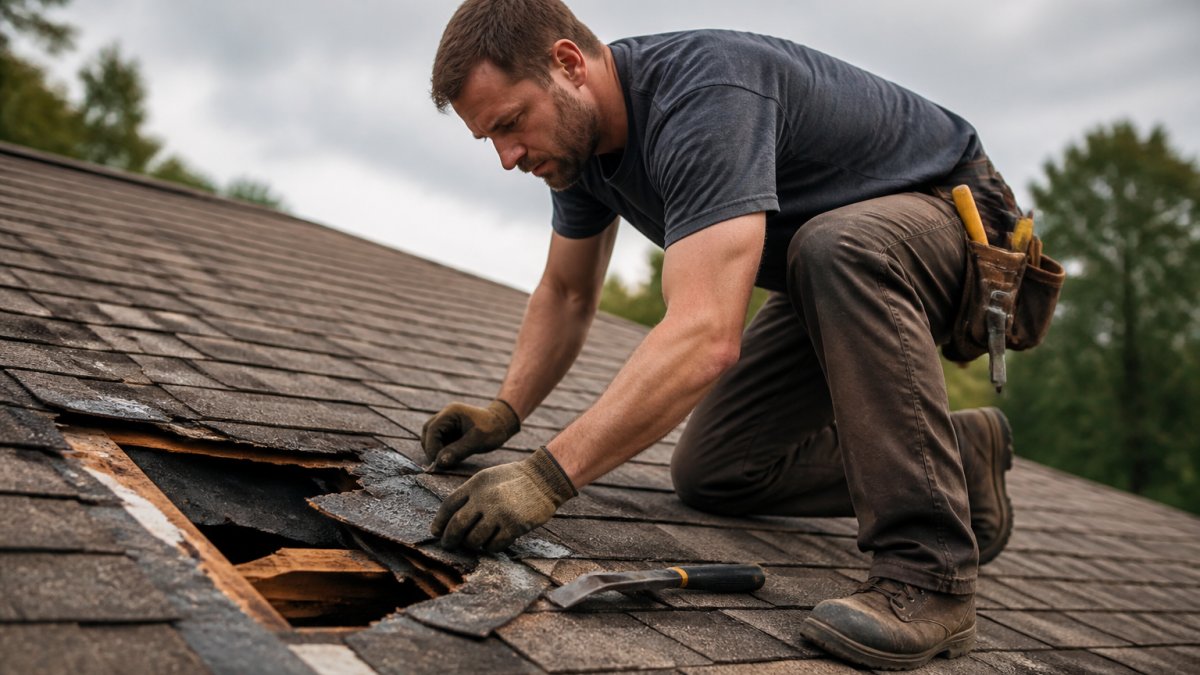
- A visible hole, missing shingles, or exposed underlayment after a storm
- Sagging rooflines or a ceiling that bulges under trapped water
- Granules collecting in gutters after a hailstorm, which points to shingle damage
- Daylight showing through roof boards in the attic
Types of Emergency Roof Damage
Most emergency calls fall into a handful of categories: wind-lifted shingles, hail bruising that breaks the shingle mat, fallen tree limbs, ice dam water intrusion, and flashing failures around chimneys and vents. Wind and impact damage tends to be visible from the ground, while flashing and underlayment failures often hide until water stains appear on a ceiling, by which point moisture damage has already started in the decking.
What to Do During a Roof Emergency: First Steps
Protect people first, then the structure. Move furniture and electronics away from the leak, place buckets under drips, and if a ceiling is bulging with trapped water, clear the room and call a professional rather than poking a hole yourself.
DIY Temporary Mitigation Safety Guide
You can slow damage from the ground without stepping on the roof. Work through this in order:
- Photograph and video all damage before touching anything
- Move valuables and electronics out of the affected room
- Place buckets and plastic sheeting under active drips
- If safe from a ladder, tarp only what you can reach without stepping onto the roof
- Shut off power to any room with water near light fixtures or outlets
- Keep all receipts for tarps, materials, and any emergency labor
Material-Specific First Response
The right first move changes with what is over your head:
- Asphalt shingle. The most forgiving surface to tarp. Overlap generously and anchor at the eave. If shingles are wind-lifted but not torn, do not try to flatten them yourself, you will crack the mat.
- Metal. Slippery when wet, and fasteners can tear a tarp. If a panel is lifted, stay off it. From the ground, note the location and let a technician resecure it.
- Tile. Broken tile edges will slice a tarp. Do not attempt to remove broken pieces from a ladder, the surrounding tiles are fragile and the pieces are sharp.
- Flat membrane. A tarp is usually the wrong tool because standing water will find any gap. The correct temporary fix is a membrane patch, which is a technician job.
Emergency Roof Leak Repair Cost and What Drives It
Cost is the first thing a homeowner searches at 2 a.m. with a bucket on the floor. Here is what actually drives the number, and the ranges you should expect to see quoted.
Emergency roof leak repair cost depends on five variables:
- Affected area. A single flashing detail is a small job. A full slope of shingles over rotted decking is not.
- Decking condition. If the sheathing under the leak is soft, it has to come out. Decking replacement is often the single largest line item on an emergency invoice.
- Roof pitch and height. Steep, tall roofs require more safety setup and slower work, which raises labor.
- After-hours timing. Nights, weekends, and holidays typically carry a call-out premium over standard scheduling.
- Access. A roof reachable by ladder is cheaper to work on than one that needs a lift or scaffolding.
What Should and Should Not Be on an Emergency Invoice
A fair emergency invoice is itemized. Watch for these line items:
- Emergency call-out or after-hours fee (stated separately from labor)
- Labor hours, with the rate per hour written out
- Materials, listed by name and quantity, not "miscellaneous supplies"
- Disposal fees for removed shingles, decking, or underlayment
- Temporary mitigation (tarping, patching) billed separately from permanent repair
- Permit costs, if your jurisdiction requires one for the repair
How to File a Roof Insurance Claim After Storm Damage
Filing a roof insurance claim starts with documentation, not with a phone call to a contractor. Report the loss to your insurer first, then get estimates. Most policies require prompt notice of storm damage, and delaying can give an adjuster grounds to reduce or deny the claim.
The process runs in a predictable order:
- Photograph and video all damage, inside and out, with timestamps
- Call your insurer and open a claim; get the claim number in writing
- Schedule an adjuster inspection
- Get a written estimate from a licensed roofing contractor
- Compare the adjuster's scope against the contractor's scope before approving anything
- Keep every receipt, including temporary tarping costs
Insurance Claim Documentation Checklist
- Dated photos of every damaged area, wide shots and close-ups
- Video walkthrough of attic, ceilings, and exterior
- Written notes on when the damage occurred and the weather at the time
- Receipts for emergency tarping, materials, and hotel stays if displaced
- Contractor estimates, at least two if possible
- Copies of all correspondence with your insurer
- The adjuster's written report and scope of loss
Roofing Financing Programs That Cover Emergency Repairs
Roofing financing programs let homeowners spread the cost of an urgent repair instead of paying in full up front. Taylor-Made Roofing offers flexible financing options, including the PACE Program, Home Run Financing, and Enhancify, so an emergency repair does not have to wait on your savings account.
How to Choose an Emergency Roof Repair Service Near Me
Choosing an emergency roof repair service near me comes down to three checks: license and insurance, written estimates, and a clear response window. Anyone who cannot confirm all three before starting work is a risk you do not need.
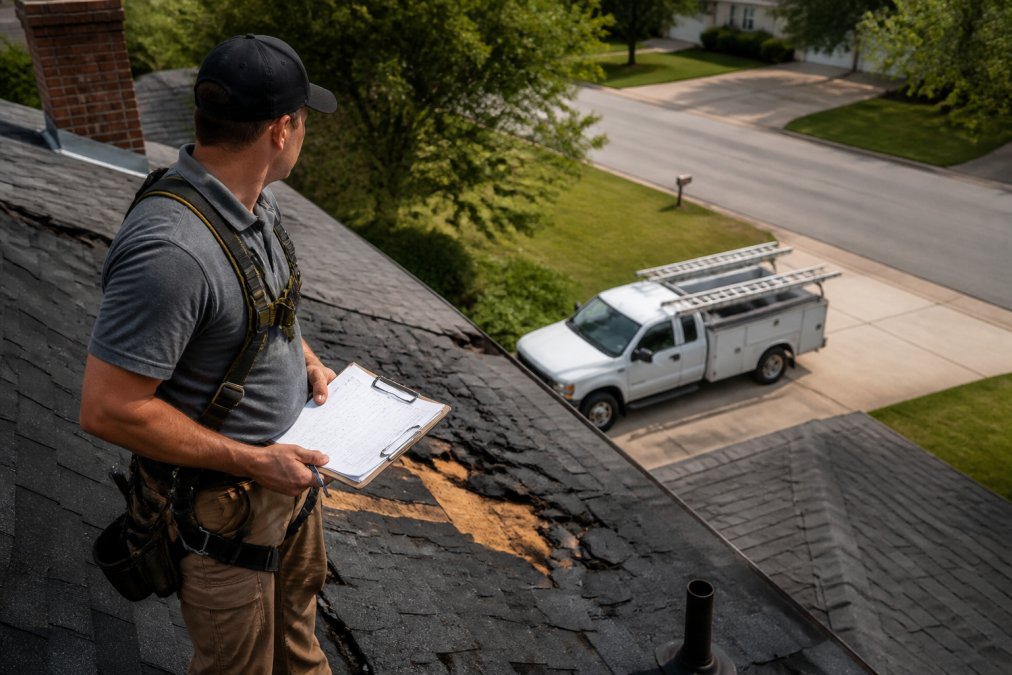
Run this checklist before you sign anything:
- Ask for the license number and verify it with your state licensing board
- Request a certificate of insurance for general liability and workers' compensation
- Get the response time in writing, not over the phone
- Confirm whether the estimate is binding or subject to change after inspection
- Ask who performs the work: employees or subcontractors
- Check that the contract lists materials by name and quantity
Residential vs. Commercial Emergency Roofing
Residential roofing emergencies usually involve a single structure and a homeowner making the call. Commercial emergencies involve flat or low-slope membrane systems, tenant safety, and business interruption, so response often includes temporary membrane patching and coordination with a property manager. The documentation burden is heavier on the commercial side. If you manage a commercial property, ask providers specifically about membrane experience rather than assuming residential experience transfers.
Material-Specific Emergency Protocols
Different roof materials fail in different ways, and the right temporary fix changes with the material.
| Material | Common Emergency Failure | Immediate Temporary Fix |
|---|---|---|
| Asphalt shingle | Wind-lifted or missing shingles | Tarp over exposed decking |
| Metal | Lifted panels, loose fasteners | Secure panels, seal seams |
| Tile | Cracked or displaced tiles | Remove broken pieces, tarp |
| Flat membrane | Punctures, seam separation | Patch with membrane material |
Conclusion
An emergency roof problem never arrives at a convenient time, and the pressure to hire the first person who answers the phone is exactly when bad decisions get made. Taylor-Made Roofing handles urgent repairs with certified technicians, written estimates, and flexible financing through the PACE Program, Home Run Financing, and Enhancify, so cost does not force a rushed choice. Contact us to schedule an inspection and get a clear scope before any work begins.
Frequently Asked Questions
How much is an emergency roof repair?
Emergency roof repair costs depend on the damage type, roof size, pitch, and materials. A small active leak repair costs less than replacing a section of storm-damaged shingles or structural decking. Emergency call-out fees and after-hours rates add to the total. Because pricing depends on your specific situation, request a written estimate from a licensed roofing contractor before work begins. Many providers offer free inspections so you know the scope before committing.
Does homeowners insurance cover emergency roof repairs?
Most homeowners insurance policies cover sudden damage from storms, hail, fallen limbs, or wind, which includes emergency tarping and active leak repair. Wear-and-tear and neglected maintenance are typically excluded. File your claim promptly, document all damage with photos before temporary repairs, and keep every receipt. Your insurer may require a licensed contractor's report. Review your policy's deductible and coverage limits so you know what to expect before the adjuster visits.
How can I get my roof repaired if I have no money?
Roofing financing programs let you spread the cost over time instead of paying upfront. Options like the PACE Program, Home Run Financing, and Enhancify are designed for homeowners who need essential repairs but lack immediate liquidity. PACE ties repayment to your property tax assessment, while Enhancify and Home Run offer consumer financing with varying terms. Ask your contractor which programs they work with and whether you qualify before scheduling the repair.
Is a temporary tarp installation considered a permanent repair?
No. Emergency tarping is a temporary measure to stop water intrusion and prevent further damage until permanent repairs can be made. Tarps typically last a few weeks to a few months depending on weather and material quality. They protect your home and support your insurance claim, but they do not restore structural integrity or fix the underlying problem. Schedule permanent repairs, including shingle replacement, flashing repair, and underlayment work, as soon as conditions allow.