 blog
Is Roof Coating Worth It for Residential Flat Roofs?
Last Updated: November 14, 2026
Quick Summary
Roof coating can be worth it on a residential flat roof when the roof underneath is still sound. A coating seals surface weathering, fills minor cracks and blistering, and reflects heat, but it does not fix structural damage, rotten decking, or saturated insulation. Evaluate the roof's condition before choosing a coating.
- Coating does not fix structural damage, rotten decking, or saturated insulation.
- Coating over trapped moisture can hide a leak that keeps spreading below the surface.
- Skipping surface preparation is a common reason coatings peel within a few seasons.
- Compare coating and replacement over the same 15 to 20 year horizon, not the first invoice.
- Check the coating manufacturer's compatibility list for your membrane before buying.
Table of Contents
- What a Roof Coating Does and Doesn't Do on a Flat Roof
- Roof Coating Cost for a Residential Flat Roof
- Flat Roof Coating Lifespan and What Shortens It
- Flat Roof Coating vs. Replacement: Total Cost of Ownership
- Best Coating for a Flat Roof by Membrane Type
- A Roof-Condition Framework: When Coating Is Worth It
- Deciding Whether Coating Fits Your Roof and Your Plans
- Frequently Asked Questions
What a Roof Coating Does and Doesn't Do on a Flat Roof
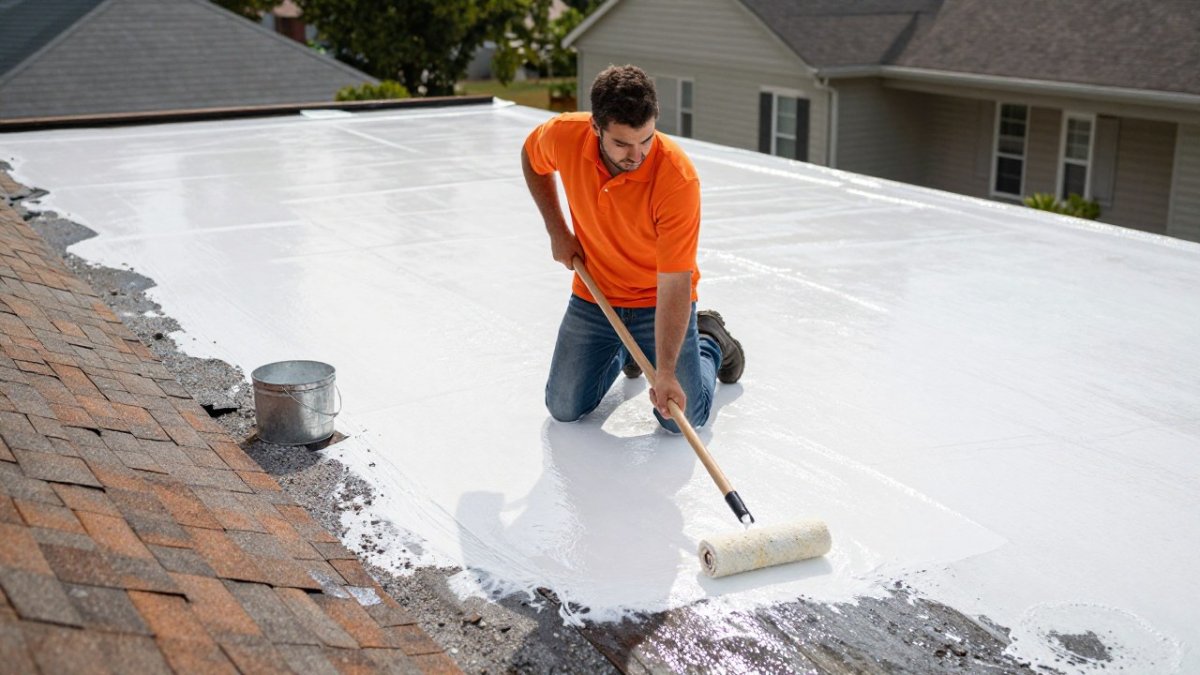
Is roof coating worth it for residential flat roofs? For many homeowners it can be, but only when the roof underneath is still sound. A roof coating is a liquid-applied layer, usually acrylic, silicone or elastomeric, that bonds to the existing membrane and forms a seamless waterproof skin. A flat roof should be evaluated on its condition before any coating is recommended.
A coating does not fix structural damage, rotten decking, or saturated insulation. It seals surface weathering, fills minor cracks and blistering, and reflects heat. Those are real benefits, but they only work when the base is intact. Coating over trapped moisture can hide a leak that keeps spreading below the surface.
Watch out: Applying a coating without proper surface preparation, such as cleaning and priming, is one of the most common reasons coatings peel within a few seasons.
Roof Coating Cost for a Residential Flat Roof
Coating pricing depends on roof size, the number of seams and penetrations, the condition of the surface, and whether the old coating must be removed. For current pricing, contact Taylor-Made Roofing for a written quote based on your roof.

When comparing bids, ask each contractor to itemize surface preparation, primer, number of coats, membrane thickness, and warranty terms. A low bid that skips preparation often costs more over time.
Flat Roof Coating Lifespan and What Shortens It
A properly applied coating on a sound roof can last several years before recoating, but lifespan varies widely. Heavy ponding water, poor drainage, foot traffic, and UV exposure all shorten it. Coating compatibility also matters, since some coatings do not bond well to certain membrane types without a primer. You can review practical fixes for recurring problems in our guide to fixing recurring roof leaks for good.
Climate plays a role too. Hot, sunny regions stress coatings through UV and thermal cycling, while freeze-thaw cycles can crack a coating that lacks flexibility. Any roof coating should carry clear documentation of the membrane and climate it was designed for.
Flat Roof Coating vs. Replacement: Total Cost of Ownership
Upfront price is the wrong comparison. The right one is total cost of ownership over a defined horizon, typically 15 to 20 years for a residential flat roof, because coating and replacement have very different cost curves. Coating is front-loaded and recurring; replacement is a larger one-time cost with a longer service interval.
What goes into the coating side of the ledger:
- Surface preparation: cleaning, degreasing, and removing failed coating or debris. This is labor-heavy and often underestimated.
- Repairs before coating: seam repair, blister repair, and flashing work. These are not optional if the warranty is to hold.
- Primer, where the membrane requires it.
- Coating material and labor, priced by coat count and membrane thickness.
- Recoating intervals. Most acrylic and elastomeric systems need recoating every several years; silicone systems typically go longer but are harder to recoat later.
- Maintenance: annual inspection, drain clearing, and touch-ups.
What goes into the replacement side:
- Tear-off and disposal of the existing membrane and any saturated insulation.
- Deck repair or replacement where moisture damage is found.
- New insulation, cover board, and membrane.
- Flashing, drains, and penetration details.
- Manufacturer warranty registration and any code-required upgrades.
The comparison only works if you use the same time horizon for both. A coating that costs less than half of replacement but needs recoating twice in 15 years may not beat a replacement that lasts 20 years, and a replacement that uncovers saturated insulation also removes a problem the coating would have masked. Conversely, if the membrane is sound and the remaining service life is short, a coating can defer a large capital outlay for years.
Warranty and documentation affect the math. Manufacturer coating warranties typically require specific preparation, primer, and application thickness, and they may be voided by prior coatings or unaddressed ponding. Replacement warranties are usually longer and broader. Ask for the warranty document, not just the term, and confirm what voids it.
Existing roof warranties matter. If the current membrane is still under a manufacturer warranty, coating it may void that warranty. Get the manufacturer's position in writing before proceeding.
Watch out: A low coating bid that skips preparation, primer, or repairs shifts cost into the recoating cycle, the savings disappear at the first failure.
Build a simple spreadsheet: list installed cost, expected service life, number of recoats or replacements within your horizon, and annual maintenance for each option. Use current quotes for both, and compare the totals, not the first invoice.
The article breaks the coating side and the replacement side of the cost comparison into the items below.
| Cost side | Items included | Key note |
|---|---|---|
| Coating | Surface preparation, repairs before coating, primer, coating material and labor | Labor-heavy prep is often underestimated |
| Coating | Recoating intervals, annual maintenance | Acrylic and elastomeric need recoating every several years |
| Replacement | Tear-off and disposal, deck repair, new insulation and membrane | Larger one-time cost with a longer service interval |
| Replacement | Flashing, drains, penetration details, warranty and code upgrades | Replacement warranties are usually longer and broader |
Best Coating for a Flat Roof by Membrane Type
Coating choice depends on the membrane underneath. Acrylic coatings suit many modern single-ply membranes but are less forgiving of ponding water. Silicone coatings handle standing water well and resist UV, but they are harder to recoat later and can be difficult to adhere over other coatings. Elastomeric coatings offer good flexibility and reflectivity for many built-up and modified bitumen roofs.
Check the coating manufacturer's compatibility list for your specific membrane before buying. Matching the coating to the membrane is what determines whether the warranty stays valid.
A Roof-Condition Framework: When Coating Is Worth It
Most coating failures on homes trace back to a roof that was never a good candidate in the first place. The framework below is residential-specific: it accounts for the smaller square footage, tighter access, occupied living space below, and drainage patterns typical of a house rather than a commercial building. Work through the checks in order, a failure at any early step usually means replacement, not coating.
1. Deck and structure. Walk the roof or have it walked. Soft spots, springy decking, deflection, or sagging around penetrations indicate the substrate can no longer carry a coating system. A coating is a surface membrane; it adds no structural capacity. If the deck is compromised, stop here.
2. Moisture in the assembly. Saturated insulation and trapped moisture are the most common reasons a coating hides a problem instead of solving it. Look for ceiling stains, damp insulation visible at edges or penetrations, blisters that feel soft or spongy, and rusted fasteners. A moisture scan or core sample may be warranted on older roofs. Coating over a wet assembly traps the moisture and accelerates deck deterioration.
3. Membrane condition. Coating is a candidate when the membrane is intact and the problems are surface-level: chalking, minor cracking, seam weathering, small blisters, and UV degradation. It is not a candidate when there is widespread splitting, large open blisters, reinforcement showing through, or numerous patched areas, those signal the membrane is at the end of its service life.
4. Drainage and ponding. Persistent ponding that survives 48 hours after rain is a red flag (Still Water Runs Deep - Proper roof slope and drainage are important to prevent excessive...). Standing water stresses most coatings, shortens service life, and points to slope or drain problems that a coating will not correct. Correct the drainage first, or choose a coating rated for continuous immersion, and confirm the manufacturer allows it.
5. Penetrations and details. Count the vents, pipes, skylights, and HVAC curbs. A roof with many penetrations has more detail work, more chances for adhesion failure, and a higher installed cost per square foot. On a small residential roof, detail work can dominate the budget.
6. Occupancy and access. Because the space below is occupied, dust, odor, and cure time matter more than on a commercial roof. Confirm the coating's recoat window and ventilation requirements fit how the home is used.
7. Age and service life remaining. If the existing membrane is near the end of its expected service life, a coating buys time but does not reset the clock. Compare the coating's expected service life against the remaining life of the membrane before committing.
Use this framework as a screening tool, not a substitute for a professional inspection. If the roof passes steps 1 through 4 and the problems are surface-level, coating is usually worth pricing. If it fails any of them, get a replacement quote before you spend on a coating.
Deciding Whether Coating Fits Your Roof and Your Plans
If your roof is sound and your main goal is to slow surface wear, coating is a reasonable option. If you plan to sell within a few years, a documented coating history can help buyers, but disclose any known leaks. For a clear cost comparison before you decide, review current roof replacement cost benchmarks. When you collect bids, use a method for comparing roofing contractor quotes to keep the comparison fair. When you are ready to act, book a professional roof inspection to confirm whether coating suits your roof. Contact Taylor-Made Roofing to schedule an inspection and get a clear, written recommendation for your home.
Frequently Asked Questions
How much does a flat roof coating cost?
Costs for a residential flat roof coating depend on roof size, the coating type, the condition of the existing surface, and how much prep work is needed. Because pricing varies by quantity, roof access, and local labor, Taylor-Made Roofing does not publish a standard price. Request a written, itemized quote from Taylor-Made Roofing to compare the scope of work, the coating product, and any repairs included before deciding.
How long does a flat roof coating last?
A properly installed flat roof coating can extend the service life of the underlying roof, but its lifespan depends on the coating material, climate, drainage, and how well the existing membrane was prepared. Ponding water, foot traffic, and UV exposure all shorten coating life. Regular inspections and timely recoating help you get the full service life from the system.
Can roof coating fix an existing leak?
A coating can seal minor leaks caused by surface wear, small cracks, or failed seams, but it cannot repair a leak caused by saturated insulation, rotted decking, or failed flashing. Those problems need to be fixed before coating. A roofer should inspect the cause of any leak first, since coating over moisture intrusion can trap water and make the damage worse.
Is roof coating a good alternative to replacing a flat roof?
Roof coating is a reasonable alternative when the existing membrane is structurally sound, has no widespread blistering or deck damage, and drains properly. It is usually not a fit when the roof has multiple layers of failure, saturated insulation, or repeated leaks. In those cases, replacement is typically the more durable choice.