 How-to
7 Steps to Compare Roofing Contractor Quotes
Last Updated: October 30, 2026
Quick Summary
To compare roofing contractor quotes, build a spreadsheet with one column per contractor and one row per line item, then score each bid on scope, materials, terms, and risk instead of total price alone. Normalize every bid to the same scope first, because a tear-off and a layover are not the same job.
- An estimate without a line-item breakdown cannot be compared to anything.
- Use a 1-5 scale per row and weight total price at 25%, scope at 20%, and materials at 15%.
- Ask for the per-sheet decking price in writing before work starts.
- A contractor who asks you to pull the permit is shifting liability onto you.
- Walk away from any contractor who pressures you to sign today.
Table of Contents
- Why Roofing Contractor Quotes Vary So Much
- What Should a Roofing Estimate Include
- The Roofing Estimate Checklist for Line-by-Line Comparison
- Questions to Ask a Roofing Contractor Before You Sign
- Roofing Contractor Red Flags That Should End the Conversation
- How to Compare Roofing Contractor Quotes Side by Side
- Request Your Itemized Roofing Quote
- Frequently Asked Questions
Why Roofing Contractor Quotes Vary So Much
Learning how to compare roofing contractor quotes starts with accepting an uncomfortable fact: three bids for the same roof can differ by thousands of dollars, and price is the least reliable signal of value. This confusion is common among homeowners. A quote is not a commodity price. It is a bundle of decisions about materials, labor, scope, and risk, and each contractor bundles them differently.
A roofing estimate is a written offer that specifies the scope of work, materials, labor, and terms for a roofing project. Two estimates for the same house can describe completely different jobs.
The variation comes from four places:
- Scope: One bid includes a full tear-off; another proposes a layover over the old shingles.
- Materials: Shingle type, underlayment grade, and flashing quality swing the number.
- Labor and overhead: Crew size, sub-contractors, insurance, and permit handling.
- Margin and risk: How much the contractor pads for unknowns like decking repair.
That is why comparing bottom lines alone tells you almost nothing. The Federal Trade Commission's guidance on home improvement contracts is clear that a written contract should spell out what work will be done, who performs it, and the payment terms. Your job is to make every bid answer those questions the same way.
What Should a Roofing Estimate Include
A complete roofing estimate should include the scope of work, roof system components by name and grade, square footage and roof pitch, permit and disposal fees, a project timeline, warranty terms, and payment schedule. If any of these are missing, the bid is incomplete, not cheaper.
Here is the short answer most homeowners never get: an estimate without a line-item breakdown cannot be compared to anything. When a contractor hands you a single number on a business card, you are being asked to trust rather than evaluate.
A proper estimate covers:
- Tear-off versus layover, stated explicitly
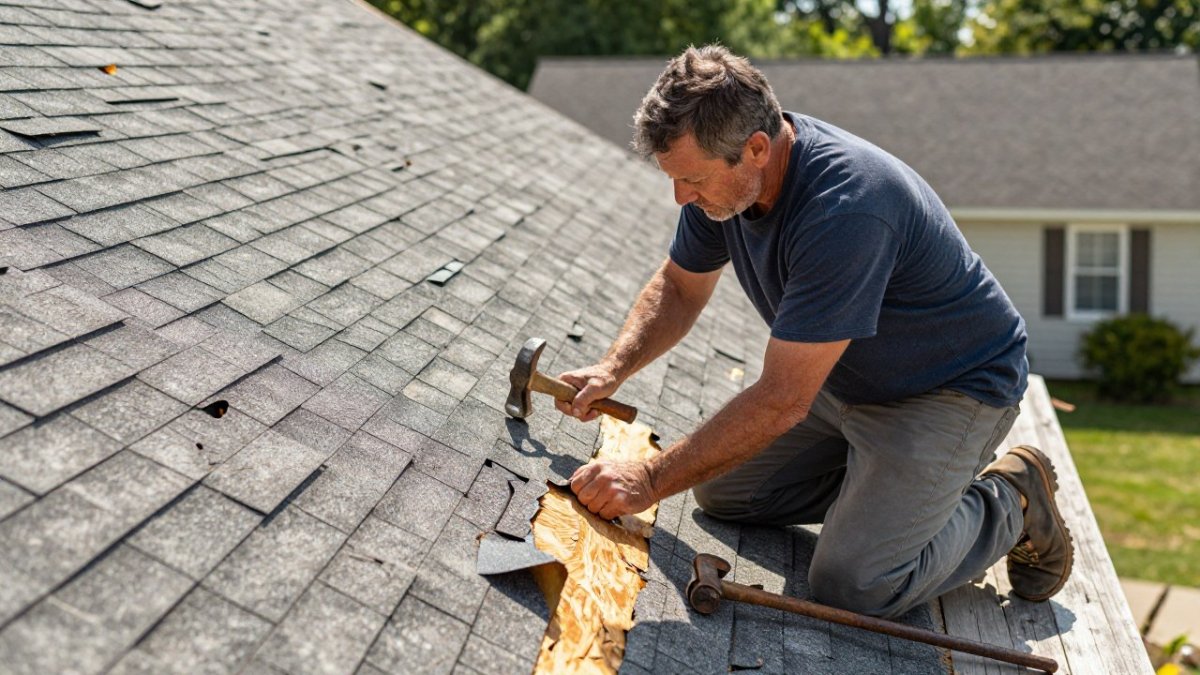
- Decking repair terms, including the per-sheet price if rot is found
- Underlayment, drip edge, flashing, and ventilation listed as separate components
- Shingle type and manufacturer, not just "architectural"
- Permit fees and disposal fees as their own lines
- Labor warranty and material warranty, with lengths and transferability
Ask for the manufacturer's written warranty document, not a verbal promise. Material warranties and labor warranties are not the same thing.
The Roofing Estimate Checklist for Line-by-Line Comparison
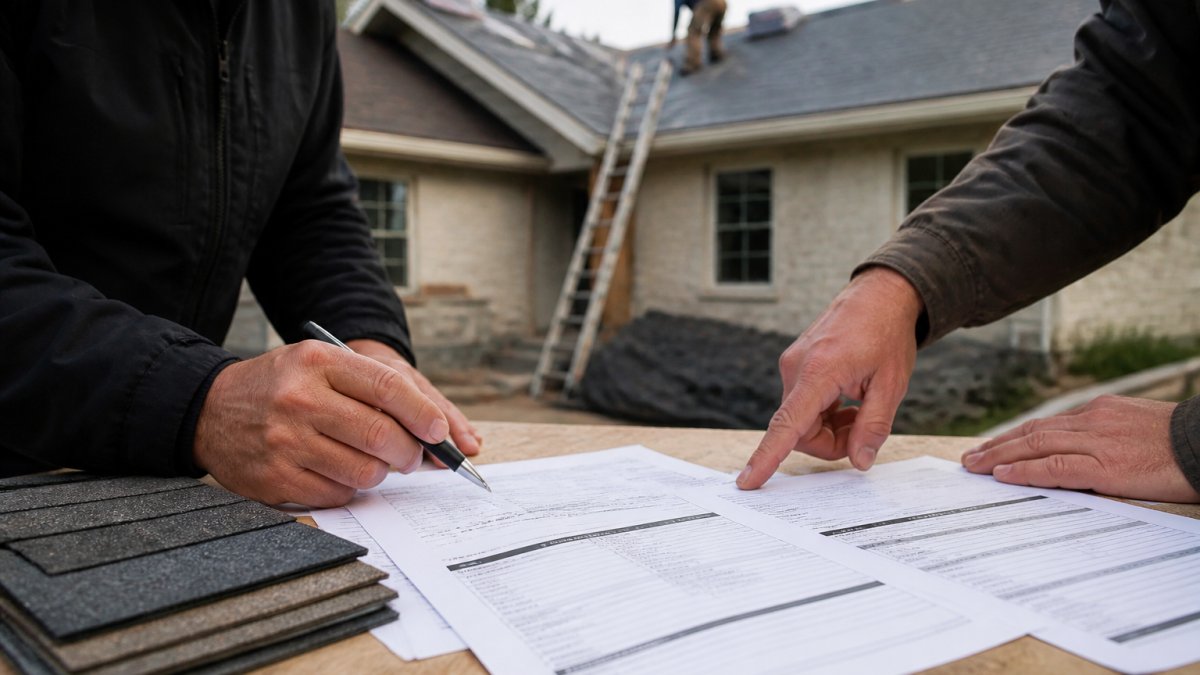
A roofing estimate checklist turns a stack of bids into a fair comparison by forcing every contractor to answer identical questions in writing. Use the same checklist for every bid you collect.
Run each quote through this list:
- Full tear-off included, with disposal fees listed
- Decking repair priced per sheet, not "as needed"
- Underlayment product and grade named
- Drip edge, flashing, and ventilation itemized
- Shingle type, brand, and warranty tier specified
- Roof pitch and square footage stated
- Permit fees included and who pulls the permit
- Project timeline with a start and completion date
- Payment schedule tied to milestones, not upfront
- Labor warranty length and transferability in writing
Compare like for like, and the cheapest bid often stops looking cheap. Use the roofing materials price guide to benchmark each line item.
Questions to Ask a Roofing Contractor Before You Sign
The right questions to ask a roofing contractor fall into four buckets: credentials, financial stability, process, and accountability. Ask every contractor the same questions in the same order, and write the answers down next to each bid. The first two buckets are where most homeowners stop too early, and where the real risk lives.
Credentials:
- Are you licensed, and can I see the number?
- Can you provide a certificate of general liability insurance and workers compensation? Call the insurer's number on the certificate to confirm the policy is active and the limits are what the certificate says.
- Will you use sub-contractors, and are they covered under your policy or their own?
Financial stability:
- How long have you operated under this business name, and can you show a current certificate of good standing from the state? A contractor who cannot produce one may be operating on a lapsed registration.
- Will you provide a lien waiver with each payment? Without one, a supplier or sub who is not paid can file a lien against your house even after you have paid the general contractor in full.
- Do you carry a surety bond, and what is the bond amount?
- Who are your material suppliers, and will you provide a release of lien from the supplier at final payment? Suppliers are the most common source of surprise liens on roofing jobs.
- Are you aware of any notice-to-owner requirements in my state?
Process:
- Who pulls the permit, and will the permit be posted and inspected? A contractor who asks you to pull the permit as the homeowner is shifting liability onto you.
- How do you handle decking repair discovered mid-job, and what does a change order look like? Ask for the per-sheet price in writing before work starts, and ask whether the change order requires your signature before the extra work proceeds.
- What is the projected timeline, and how do you communicate delays? Get the start and completion dates in the contract, not just the verbal estimate.
Accountability:
- What does your labor warranty cover, and is it transferable if I sell? Ask for the warranty document, not a verbal promise.
- What is your process for a callback or leak, and what is the response window?
- Can I see examples of your craftsmanship standards, and can I speak with two recent customers whose roofs are at least a year old?
Knowing what poor workmanship looks like helps you judge the answers.
Roofing Contractor Red Flags That Should End the Conversation
Certain roofing contractor red flags are disqualifying on their own, no matter how good the price looks. Walk away when you see them.
The biggest one: pressure to sign today. A contractor who demands a deposit before you have read the contract, or who offers a "today only" discount, is selling urgency, not quality. Other red flags:
- No physical address or verifiable license number
- Refusal to provide insurance certificates
- A bid with no line items, no scope, and no timeline
- Requests for large upfront cash payments
- Door-to-door solicitation with high-pressure tactics
- No written warranty, or a verbal-only labor warranty
Storm chasers are a recurring problem after major weather events. How to avoid roofing scams walks through the warning signs before you sign. They collect deposits, do minimal work, and leave town.
How to Compare Roofing Contractor Quotes Side by Side
To compare roofing contractor quotes side by side, build a single spreadsheet with one column per contractor and one row per line item, then score each bid on scope, materials, terms, and risk, not just total price.

Step 1, Normalize the scope before you compare price. If one bid is a tear-off and another is a layover, they are not the same job and the totals cannot be compared directly.
Step 2, Score each factor, don't just record it. Use a simple 1-5 scale per row and weight the rows that matter most to you. A workable weighting for most homeowners:
| Comparison Factor | What to Record | Weight | Why It Matters |
|---|---|---|---|
| Total price | Bottom-line number | 25% | Baseline only, not the decision |
| Scope | Tear-off or layover, decking terms | 20% | Layover hides problems and can void warranties |
| Materials | Shingle brand, grade, underlayment | 15% | Drives lifespan and material warranty |
| Warranties | Labor and material, in years, transferable? | 15% | Determines who pays for failures |
| Financial protection | Lien waivers, bond, supplier releases | 10% | Protects you from liens and default |
| Timeline and payment | Start/completion dates, milestone schedule | 10% | Protects your schedule and cash |
| Communication | Written change-order process, callback window | 5% | Predicts how problems get handled |
Multiply each score by its weight and add the columns. The highest total, not the lowest price, is the bid to beat.
Step 3, Convert differences into dollars. When two bids differ on a line item, price the difference rather than arguing about it. If one bid prices decking repair at a per-sheet rate and another says "as needed," ask the "as needed" contractor for a per-sheet number and plug it in. If one bid includes permit and disposal fees and another omits them, add the omitted fees to that column so both totals reflect the same scope.
Step 4, Flag the change-order exposure. A bid with a low base price and open-ended decking or flashing terms can climb after work starts.
Two bids can look identical on price and be wildly different in scope. The average cost of roof replacement gives you a baseline for the total. A layover bid will almost always undercut a tear-off bid, and it is not the same job. When you weigh the total, factor in what a premature second replacement would cost, and the "cheaper" bid often loses. For current pricing on your project, please contact Taylor-Made Roofing through our website.
Request Your Itemized Roofing Quote
An itemized quote is the only quote you can actually compare. When you request yours, ask for every line above in writing, and hold every contractor to the same format.
Taylor-Made Roofing offers professional roofing solutions and flexible financing options, including the PACE Program, Home Run Financing, and Enhancify. For current pricing or a quote, please contact us through our website.
Frequently Asked Questions
Why do roofing contractor quotes vary so much for the same house?
Most of the spread comes from differences in scope of work, not markup. One bid may include a full tear-off, new underlayment, drip edge, and flashing; another may quote a layover over the old shingles. Shingle type, roof pitch, decking repair allowances, permit fees, and disposal fees also move the number. Before you compare price, confirm every bid describes the same roof system components and the same square footage.
How many roofing quotes should I get?
Three is the practical minimum. Three bids let you spot an outlier on either end and give you a baseline for what the scope of work actually involves. If two bids are close and one is far lower, that gap usually points to a missing line item such as decking repair or ventilation rather than a genuine discount. Get all three in writing with line-item breakdowns so the comparison is fair.
What should I look for when comparing roofing quotes?
Start with the scope: tear-off versus layover, underlayment, flashing, drip edge, and ventilation. Then check credentials: contractor license, general liability insurance, and workers compensation coverage. Read the labor warranty and material warranty separately, since they often come from different parties. Finally, confirm the project timeline, payment schedule, and how change orders are handled. A roofing estimate checklist keeps all of this in one place.
Should I choose the cheapest roofing contractor?
A quote that sits well below the others deserves scrutiny, not celebration. Ask what is excluded: old shingle disposal, permit fees, ice and water shield, or decking repair. A low bid can also signal sub-contractors who are not covered by the contractor's insurance. Compare the line-item breakdown against the other bids, verify the license and insurance, and weigh the warranties. The lowest number is only the best value when the scope matches.
Comparing roofing contractor quotes is not about finding the lowest number. It is about finding the bid that tells you the truth about scope, materials, and risk. Taylor-Made Roofing can put that in writing for you, with itemized quotes, quality workmanship, and financing options through the PACE Program, Home Run Financing, and Enhancify. Get started with Taylor-Made Roofing and request an itemized quote you can actually compare.