 ultimate-guide
Average Cost of Roof Replacement 2026: What to Expect
Table of Contents
- What the Average Cost of Roof Replacement in 2026 Actually Covers
- Factors Affecting Roof Replacement Price
- Asphalt Shingle vs Metal Roof Cost: Which Makes Sense for Your Home
- Roof Replacement Financing Options That Spread the Cost
- Signs You Need a New Roof: When to Replace vs. Repair
- How to Compare Roofing Contractor Quotes and Avoid Surprises
- Frequently Asked Questions
Last Updated: October 2, 2026
What the Average Cost of Roof Replacement in 2026 Actually Covers
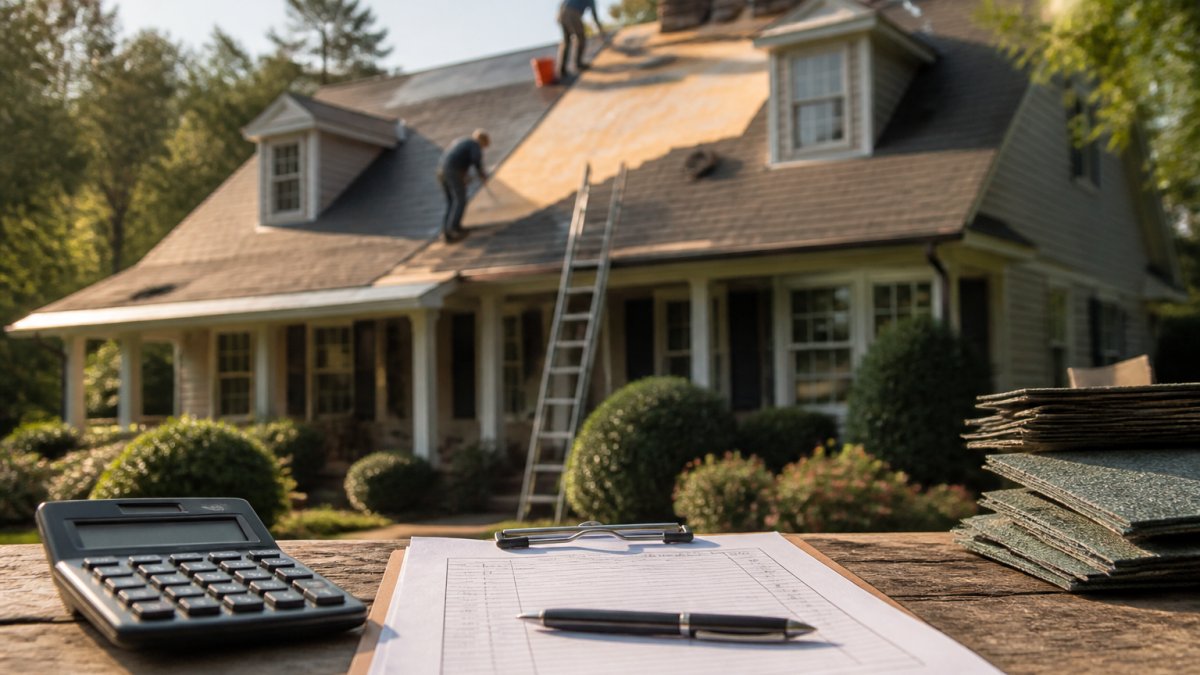
The average cost of roof replacement 2026 depends on far more than shingle price per square foot. A complete roofing system includes materials, labor, tear-off, disposal, underlayment, flashing, and ventilation, each moving the total differently. This guide breaks down what drives your estimate so you can compare quotes with confidence.
Materials, Labor, and Disposal Fees
Most homeowners fixate on shingles and ignore everything underneath. That's a mistake.
Why Square Footage and Roof Pitch Drive the Price
Roof size sets the baseline for material quantities. Contractors price in "roofing squares," where one square equals 100 square feet of roof surface; a larger footprint means more shingles, underlayment, and labor hours.
Factors Affecting Roof Replacement Price
Several variables explain why two neighbors with similar homes receive quotes that differ by thousands of dollars. Understanding these factors affecting roof replacement price helps you spot a fair estimate and question an inflated one.
Roof Size, Slope, and Installation Complexity
The biggest cost drivers are size and complexity. Square footage determines material volume, roof slope determines installation time and safety measures, and complexity, chimneys, skylights, valleys, multiple roof levels, adds labor hours and flashing work.
| Cost Factor | What It Affects | Why It Matters |
|---|---|---|
| Square footage | Material quantity | Sets the baseline for every other line item |
| Roof pitch and slope | Labor hours, safety gear | Steep roofs take longer and cost more to install |
| Installation complexity | Flashing, valleys, penetrations | More detail work means more skilled labor |
| Decking condition | Structural repairs | Rotted decking must be replaced before roofing |
| Permit requirements | Timeline, fees | Unpermitted work can complicate a future sale |
Asphalt Shingle vs Metal Roof Cost: Which Makes Sense for Your Home
Asphalt shingles cost less upfront; metal roofing costs more but lasts considerably longer. The right choice depends on how long you plan to stay and what you value in maintenance and curb appeal.
Lifespan, Curb Appeal, and Energy Efficiency ROI
Asphalt shingles are the most common residential roofing material, and their lower cost makes them the default for budget-conscious replacements. They're also the easiest to repair, since matching shingles is straightforward.
Roof Replacement Financing Options That Spread the Cost
A failing roof rarely waits for a convenient cash position. Most homeowners choose between four paths: cash, a home equity product, contractor-offered financing, or a property-assessed program. Each has a different cost of capital, credit impact, and answer to "What happens if I sell before it's paid off?"
Cash, Home Equity, and Contractor Financing Compared
Cash is cheapest on paper because there is no interest, but it ties up reserves you might need for emergencies. If the roof is failing and your emergency fund is thin, cash is often the wrong answer even though it looks disciplined.
PACE, Home Run Financing, and Enhancify Explained
PACE (Property Assessed Clean Energy) is the most misunderstood option here. It isn't a traditional loan, it's a voluntary assessment added to your property tax bill and repaid alongside your taxes, usually over 5 to 20 years. Because the obligation attaches to the property rather than to you personally, it can transfer to a buyer at resale in some programs, but rules vary significantly by state, and some mortgage lenders treat an active PACE assessment as a complication during underwriting.
Insurance Coverage: What Actually Triggers a Claim
Financing is only half the equation. If damage came from a covered event, insurance, not a lender, should pay most of the bill. The key distinction is storm damage versus wear and tear.
- Covered events typically include hail, wind, fallen trees, fire, and sudden water intrusion from a storm, sudden and accidental, the language most policies use.
- Excluded causes typically include age, gradual deterioration, granule loss, poor installation, and lack of maintenance. A roof that is simply old is not a covered loss, no matter how bad it looks.
- The overlap is where disputes happen. A 20-year-old roof damaged by hail is still a covered loss in most policies, but the payout is reduced by depreciation. That is what actual cash value (ACV) versus replacement cost value (RCV) means in practice: ACV pays today's value of a worn roof, RCV pays what it costs to replace it, minus your deductible.
A few practical points most guides skip:
- Document before you call. Photograph damage from the ground before any tarping or repair, and keep the date-stamped images. Adjusters weigh contemporaneous evidence heavily.
- Know your deductible. Many policies now carry a separate, higher wind or hail deductible expressed as a percentage of dwelling coverage rather than a flat dollar amount. A 2% deductible on a $400,000 home is $8,000 out of pocket before the insurer pays anything.
- Watch the claim deadline. Most policies require prompt notice, and some states impose a separate deadline for filing a claim after a storm. Missing it is one of the most common reasons a legitimate claim is denied.
- Ask about matching. If only part of the roof is damaged, some policies pay to replace only the damaged slope, which can leave a visibly mismatched roof. Ask your adjuster how matching is handled under your policy form.
Signs You Need a New Roof: When to Replace vs. Repair
A roof that isn't leaking yet isn't automatically one you can wait on. The useful question isn't "is it leaking?" but "how much life is left, and what will patching it cost me?" That reframing, from a leak test to a total-cost-of-ownership calculation, is where most homeowners get talked into the wrong decision.
The Inspection Checklist: What to Look For
You don't need to climb on the roof. Most signals that matter are visible from the ground, a ladder at the eaves, or inside the attic.
From the ground:
- Granule loss. Check the gutters and downspout splash zones. A handful of granules after a storm is normal. A steady accumulation of sandy grit every time it rains means the shingles are shedding their protective surface.
- Curling, cupping, or clawing shingles. Shingles that lift at the edges or cup upward have lost their seal and are vulnerable to wind uplift.
- Missing or displaced shingles. Isolated missing shingles after a wind event are a repair. Widespread displacement across multiple slopes points to a system-wide failure.
- Sagging rooflines. A dip or wave in the roof plane usually means a structural or decking problem underneath, not just a surface issue.
- Rusted or stained flashing. Flashing around chimneys, vents, and valleys is the most common leak point on any roof. Deteriorated flashing is often repairable even when the shingles are fine.
From the attic:
- Daylight through the roof boards. If you can see light, water can get in.
- Dark water stains or streaks on the underside of the decking. These mark where water has already traveled.
- Soft or spongy decking. Press gently with a screwdriver handle. If it gives, the decking may need replacement.
- Matted or compressed insulation. This usually signals a long-running leak or an attic ventilation problem.
From your records:
- Age relative to expected lifespan. Asphalt shingles commonly last 15 to 30 years depending on grade and climate. Metal roofing commonly lasts 40 to 70 years. Tile and slate can last far longer but are heavier and require structural verification. If your roof is at or past the low end of its range, repairs are buying time, not solving the problem.
- Number of repairs in the last five years. Two or more repairs on the same slope is a pattern, not bad luck.
The Replace-vs-Repair Math
The replace-versus-repair decision usually comes down to three questions:
- How old is the roof? If it's near or past its expected lifespan for its material type, repairs are temporary.
- How widespread is the damage? A single damaged area is a repair. Widespread granule loss or multiple failing sections point to replacement.
- Are you planning to sell? A roof that fails a buyer's inspection can stall or kill a sale, and a replacement before listing is often simpler than negotiating a credit.
| Year | Likely Spend on a Failing Roof | What It Buys You |
|---|---|---|
| Year 1 | One or two patch repairs | Temporary leak stoppage |
| Year 2 | Flashing reseal, possible tarp after storm | More temporary protection |
| Year 3 | Larger repair, possible decking replacement | Localized fix, not a system fix |
| Year 4 | Repeat repairs, rising insurance scrutiny | Diminishing returns |
| Year 5 | Emergency replacement, often at premium pricing | The replacement you could have scheduled |
If your roof is old but not actively leaking, get a professional inspection before deciding. A roofer who tells you to wait is giving you useful information, not losing a sale, but one who says so without a written inspection report is asking you to take their word for it. Ask for the report.
How to Compare Roofing Contractor Quotes and Avoid Surprises
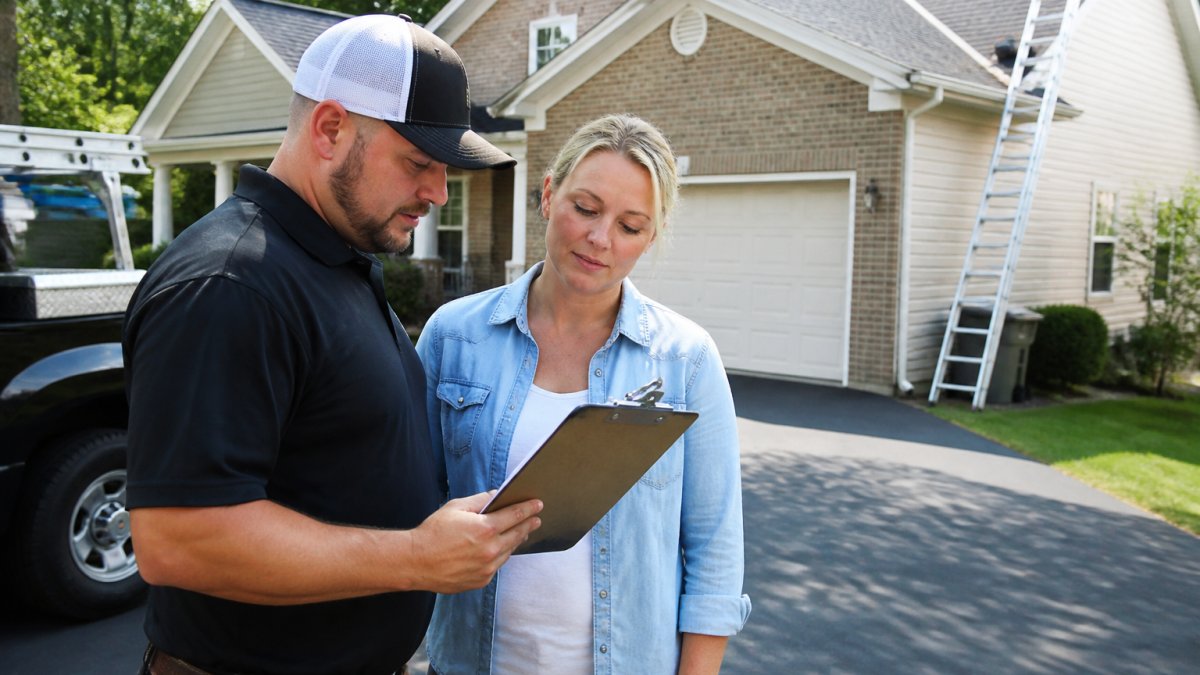
Comparing roofing contractor quotes line by line is the best protection against surprises. Ask for an itemized estimate covering materials, labor, tear-off, disposal, permits, and any decking contingency.
Then verify these points before signing:
- Warranty coverage: Ask for both the manufacturer's material warranty and the contractor's workmanship warranty, in writing.
- Insurance and licensing: Confirm current liability insurance and any required state or local licensing.
- Payment schedule: Be cautious of large upfront deposits. A reasonable schedule ties payments to completed milestones.
- Timeline: Get an estimated start date and duration, and ask what weather delays look like.
- Decking policy: Ask how they price replacement decking if they find rot during tear-off.
Frequently Asked Questions
What is the 25% rule for roofing?
The 25% rule is a common guideline that says if a roof repair costs more than 25% of the total roof replacement cost, you should replace the roof instead of patching it. It helps homeowners avoid sinking money into a failing roof. If your roof is over 15 years old and needs multiple repairs, replacement often makes better financial sense.
Is $50,000 for a new roof a reasonable price?
A $50,000 roof replacement is on the high end and usually reflects a large home, complex roof pitch, premium materials like slate or clay tiles, or extensive structural work. For an average-sized home with asphalt shingles, that figure would be unusually high. Always get multiple quotes and ask for a line-item breakdown of labor, materials, and disposal fees.
Is it cheaper to replace a roof with shingles or metal?
Asphalt shingles cost less upfront than metal roofing. However, metal roofing lasts two to three times longer, which can lower the total cost of ownership over decades. If you plan to stay in your home long-term, metal may offer better value. If you need a lower initial investment, asphalt shingles remain the more budget-friendly choice.
Are there federal tax credits available for new roof installations in 2026?
Federal tax credits for roofs typically apply to energy-efficient upgrades like reflective metal roofs or specific asphalt shingles that meet ENERGY STAR requirements. The credit amount and eligibility rules can change yearly, so check the latest IRS guidelines or consult a tax professional before assuming you qualify. Not all roof replacements are eligible.
How do roof pitch and complexity affect replacement costs?
Steep roof pitch and complex designs with multiple valleys, dormers, or skylights slow down installation and require extra safety measures. That added labor and time raises the total price. A simple gable roof with a low slope is faster and cheaper to replace than a steep, cut-up roof with many flashing points.
What financing options are available for roof replacements?
Financing options include PACE programs, Home Run Financing, and Enhancify, which let homeowners pay for a new roof over time instead of upfront. PACE ties repayment to your property tax bill, while Home Run and Enhancify offer unsecured loans with varying terms. Ask your contractor which programs they work with and what approval requires.
Can I replace my roof in winter?
Yes, roof replacement can happen in winter, but cold-weather installation requires extra care with materials like asphalt shingles that need warmth to seal properly. Contractors may use hand-sealing or special adhesives. Scheduling in colder months can sometimes mean faster turnaround and less competition for crew availability, though weather delays are possible.
Replacing a roof is one of the largest single investments a homeowner makes, and the uncertainty around cost, financing, and contractor quality is what makes it stressful. Taylor-Made Roofing handles the full project with itemized estimates, quality workmanship, and access to flexible financing through the PACE Program, Home Run Financing, and Enhancify, so cost doesn't have to delay protecting your home. Get started with Taylor-Made Roofing and secure your shelter with a roof built to last.