 Ultimate guide
Roofing Quote Comparison Guide 2026: Read Bids Right
Last Updated: November 10, 2026
Quick Summary
A roofing quote comparison is only meaningful when every bid describes the same work, so put each bid on a line-by-line worksheet with one row per scope item and one column per bidder. Gaps, exclusions, and allowances then jump out immediately, and the bid with the fewest blanks and clearest allowances is usually the best value.
- A low bid that excludes decking repair or permit fees is a common pattern across the industry.
- Ask for the per-sheet decking rate and the cap, then compare that number across bids.
- Read the exclusions section twice and mark each exclusion on the worksheet.
- A bid without an expiration date is not a firm number.
- A large upfront deposit with no written schedule is a common way homeowners lose money.
Table of Contents
- Why Roofing Quotes Come Back Thousands Apart
- The Line-by-Line Worksheet for a Real Roofing Quote Comparison
- What the Average Cost to Replace a Roof in 2026 Actually Covers
- Questions to Ask Roofing Contractors Before You Sign
- Roofing Financing Options That Change the Comparison
- Insurance Claims, Permits, and Code Upgrades in the Bid
- Resolving a Big Gap Between Two Bids
- Request a Line-Item Quote From Taylor-Made Roofing
- Frequently Asked Questions
Why Roofing Quotes Come Back Thousands Apart
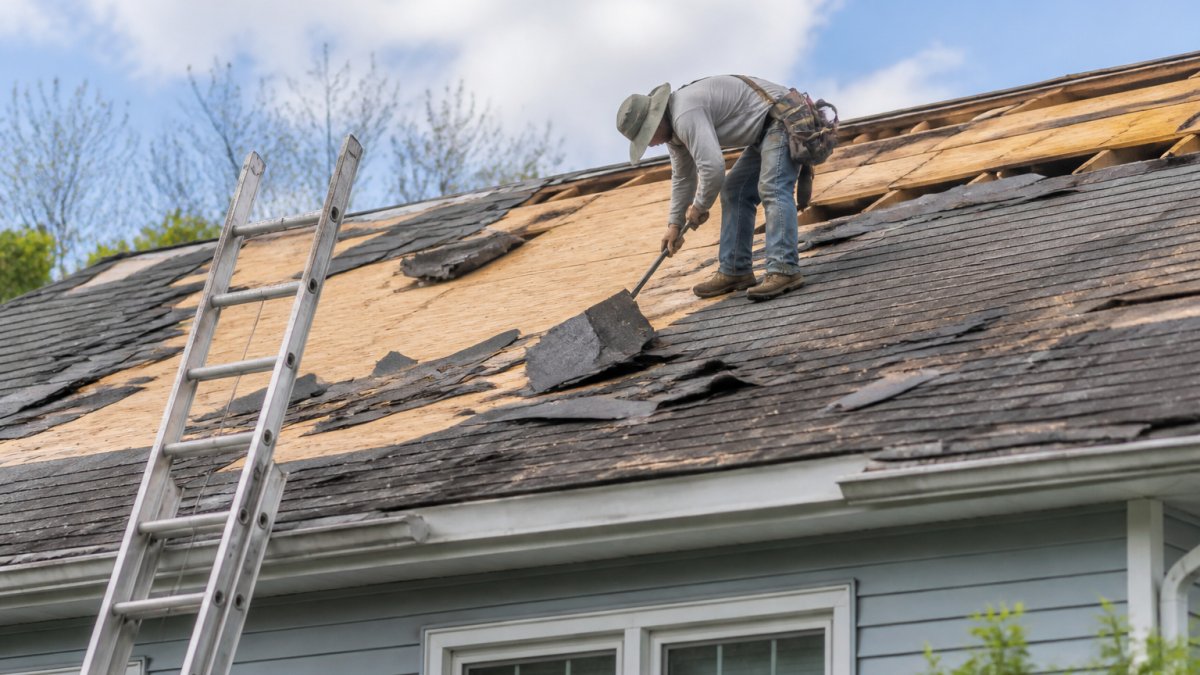
Three bids for the same roof, three wildly different numbers. It happens on almost every street, and it is the single biggest source of distrust in this industry. Here is the truth: most of the gap is not profit margin. It is scope.
A roofing quote comparison is only meaningful when every bid describes the same work. One contractor prices a full tear-off, new underlayment, and ice-and-water shield. Another reuses your existing underlayment and skips the drip edge.
A low bid that excludes decking repair or permit fees is a common pattern across the industry. The cheapest quote is rarely the cheapest job.
Below, we break down exactly how to read a bid line by line, what questions to ask roofing contractors before signing, and how financing changes the real cost of each quote.
The Line-by-Line Worksheet for a Real Roofing Quote Comparison
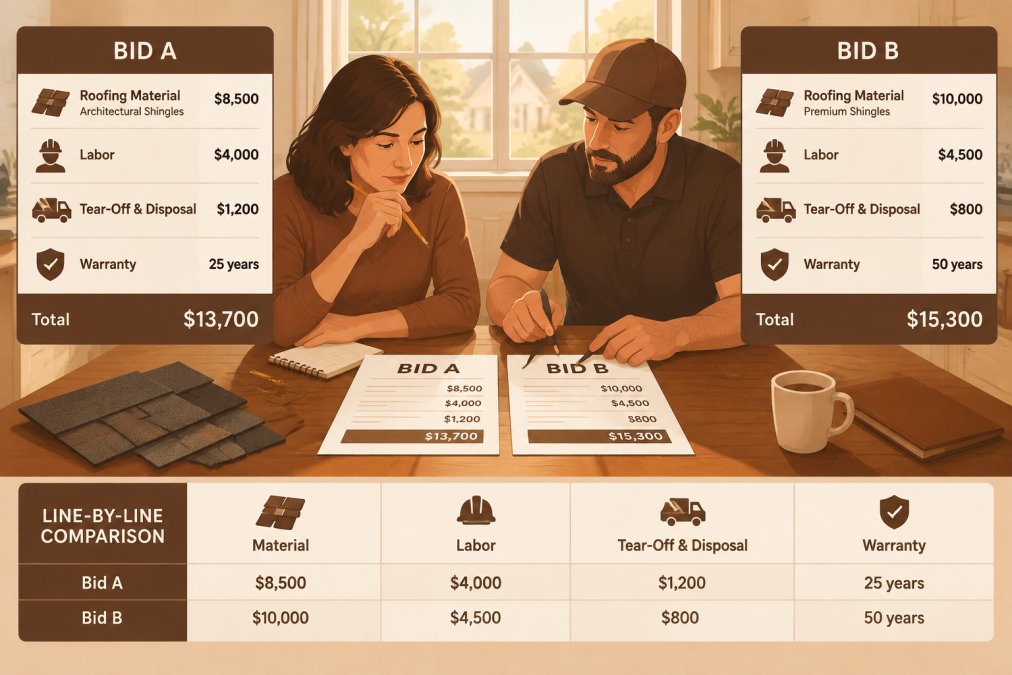
The fastest way to compare roofing quotes is a line-by-line worksheet. List every scope item down the left column, then enter each contractor's price and inclusion status across the row. Gaps and exclusions jump out immediately.
Build the Worksheet: Columns and Rows
Set up a simple spreadsheet with one row per scope item and one column per bidder. A workable layout looks like this:
| Scope item | Bid A price | Bid A included? | Bid B price | Bid B included? | Bid C price | Bid C included? | Notes |
|---|---|---|---|---|---|---|---|
| Tear-off (number of layers) | |||||||
| Dumpster and disposal | |||||||
| Decking inspection and per-sheet allowance | |||||||
| Underlayment (type and coverage) | |||||||
| Ice-and-water shield (valleys and eaves) | |||||||
| Flashing and drip edge | |||||||
| Ventilation (ridge, soffit, or both) | |||||||
| Material brand, product line, and color | |||||||
| Labor | |||||||
| Permit fee (who pulls it) | |||||||
| Code upgrades required by jurisdiction | |||||||
| Final cleanup and nail sweep | |||||||
| Manufacturer warranty (years and tier) | |||||||
| Workmanship warranty (years) | |||||||
| Payment schedule and deposit | |||||||
| Quote expiration date |
Fill in the price only where the bidder actually priced the line. If a line is blank or marked "included," write "not itemized" in the notes column, that is a scope question, not a zero. A bid that lumps underlayment, flashing, and ventilation into one "materials" line cannot be compared line by line until the contractor breaks it out.
What a Complete Line-Item Bid Looks Like
A line-item bid is an estimate that prices each component of the roofing system separately. A complete bid should itemize:
- Tear-off and dumpster/disposal fees, including the number of existing layers
- Decking inspection and a per-sheet repair allowance (state the dollar amount per sheet and the maximum)
- Underlayment type (synthetic, felt, or peel-and-stick) and the square footage covered
- Ice-and-water shield at valleys and eaves, with the linear footage specified
- Flashing, drip edge, and ventilation, listed by component rather than bundled
- Material brand, product line, and color
- Labor, permits, and final cleanup
- Warranty terms, split into manufacturer and workmanship coverage, with years stated
If a bid is one lump sum with no breakdown, ask for the itemized version before you compare anything. A contractor who routinely sells line-item bids should be able to produce one promptly; a contractor who cannot may be pricing by rule of thumb.
Allowances, Exclusions, and Quote Validity
An allowance is a set dollar amount a contractor budgets for work they cannot see until tear-off, usually decking repair. A low allowance means the price will likely climb once the roof is open.
Read the exclusions section twice. Common exclusions include permits, chimney flashing, skylight reflashing, fascia repair, and disposal of unusual debris.
Also check the quote's validity window. Material prices move, and a bid without an expiration date is not a firm number.
Watch out: a bid that lists a large "miscellaneous" or "contingency" line without a defined scope is not a line item, it is a placeholder that can absorb change orders later.
Score Each Bid Side by Side
Once the worksheet is filled, total the included lines for each bidder and note the excluded lines separately. The bid with the lowest included total is not automatically the best value; the bid with the fewest blanks and the clearest allowances usually is. Bring the completed worksheet to every contractor conversation so the discussion stays on scope rather than sales pressure.
What the Average Cost to Replace a Roof in 2026 Actually Covers
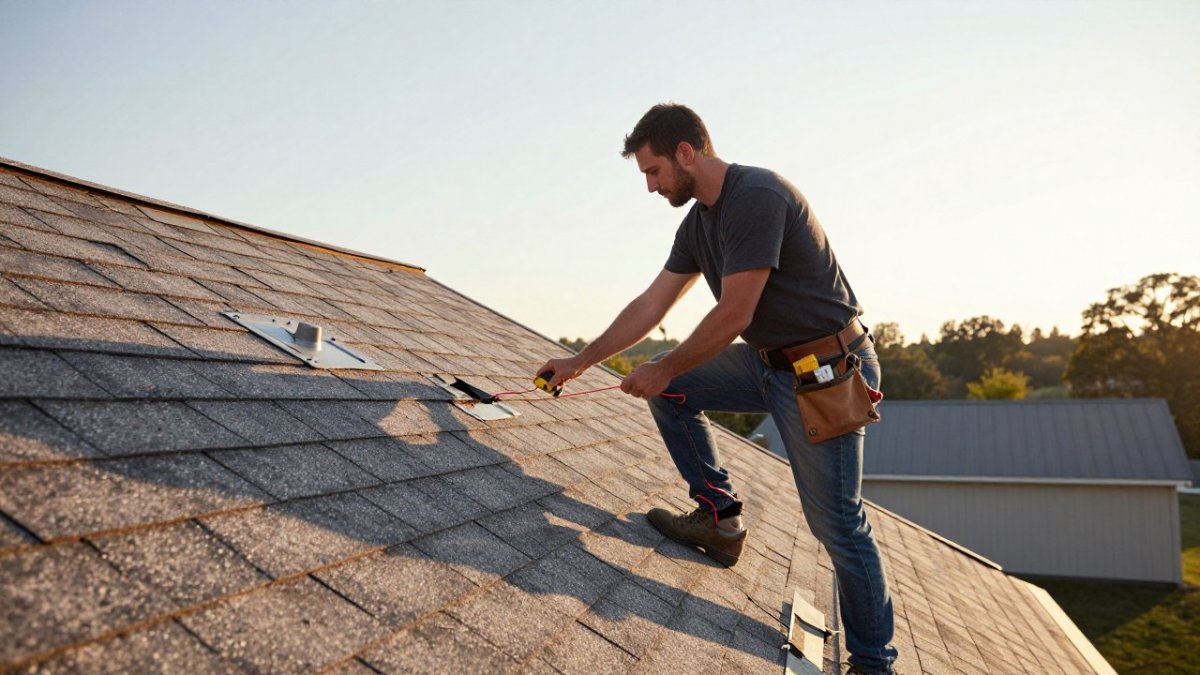
The average cost to replace a roof in 2026 depends entirely on what the number includes. A bid covering tear-off, new underlayment, flashing, and permits is not comparable to a bid that reuses existing layers and skips code upgrades.
Cost drivers fall into four buckets:
- Roof size and pitch - steeper roofs need more labor and safety equipment.
- Material choice - asphalt shingles, architectural shingles, and metal roofing sit at different price points with different lifespans.
- Tear-off and disposal - number of existing layers and dumpster costs.
- System components - underlayment, flashing, drip edge, and ventilation.
For real 2026 cost benchmarks to sanity-check the numbers in your bids, see our breakdown of the average cost of roof replacement. Treat any quote that lands far below the local range as a scope question, not a bargain.
Questions to Ask Roofing Contractors Before You Sign
Ask these before you sign anything, and write the answers into the contract:
- Is the price firm, or does it change after tear-off?
- What is the decking repair allowance, and what happens if repairs exceed it?
- Who pulls the permit, and is the fee included?
- What are the manufacturer and workmanship warranty terms, in writing?
- Will the same crew that starts the job finish it?
- What is the payment schedule, and how much is due upfront?
- How will the crew protect landscaping and clean up nails?
A contractor who answers these clearly and in writing is showing you how they run a job. Vague answers are your warning sign.
Watch out: a large upfront deposit with no written schedule is one of the most common ways homeowners lose money. Before signing, walk through our steps to verify roofing contractor credentials so you know exactly who is on your roof.
Roofing Financing Options That Change the Comparison
Two quotes with the same sticker price can cost very different amounts once financing enters the picture. A roofing quote comparison that ignores financing terms is incomplete.
Financing changes three things: the monthly payment, the total amount paid over the term, and what happens if you sell the home. Ask each contractor which programs they offer, the term length, the interest rate or fee structure, and whether the obligation transfers with the property.
At Taylor-Made Roofing, we offer flexible financing through the PACE Program, Home Run Financing, and Enhancify, so homeowners without cash on hand can still move forward on an essential repair. If you are weighing a loan against paying cash, our guide to roofing financing options explains how each structure affects the true cost of a bid.
Insurance Claims, Permits, and Code Upgrades in the Bid
Storm damage changes the whole comparison. When an insurance claim is involved, the bid must match the scope the adjuster approved, and the contractor's own estimate is a separate document.
Know your deductible before you compare: it is your out-of-pocket amount regardless of bid size.
Permits and code upgrades are the other hidden line. Many jurisdictions require a permit for a full replacement, and code may require upgrades like added ventilation or ice-and-water shield that older roofs never had. Ask every contractor three questions in writing:
- Who pulls the permit, the contractor or the homeowner?
- Is the permit fee inside the quoted price or listed as an exclusion?
- Which code upgrades does the local jurisdiction require for a replacement, and are they priced as line items?
A permit pulled by the homeowner can shift liability and inspection responsibility onto you; it is generally wise to have the contractor pull the permit and list the fee.
Code upgrades deserve their own worksheet line because they vary by jurisdiction and roof age. Common examples can include upgraded ventilation, ice-and-water shield at eaves, and fastener requirements for high-wind zones.
Resolving a Big Gap Between Two Bids
When two bids differ by thousands, do not assume the higher one is padding. Put both quotes on the worksheet and find the exact line where they diverge. The gap often sits in decking allowance, tear-off layers, underlayment grade, warranty tier, or permits.
Then ask each contractor to explain their number in writing. A professional contractor should be willing to walk you through it openly.
A suspiciously low bid deserves extra scrutiny. Our guide on how to avoid roofing repair scams lists the red flags to check before you hand over a deposit.
For a structured walkthrough of the comparison itself, follow our steps to compare roofing contractor quotes.
Request a Line-Item Quote From Taylor-Made Roofing
Comparing roofing quotes is not about finding the lowest number. It is about finding the bid that describes the whole job, in writing, from a crew that will stand behind it.
Taylor-Made Roofing offers quality roofing solutions and flexible financing options through the PACE Program, Home Run Financing, and Enhancify.
Contact Taylor-Made Roofing for current pricing or a quote.
A roof decision made on a single lump-sum number is a gamble. Ask for the breakdown, compare the scope, and choose the bid that protects your home for the long run. Taylor-Made Roofing is ready to put that estimate in your hands.
Frequently Asked Questions
What should be included in a professional roofing estimate?
A complete estimate lists tear-off and disposal, underlayment, flashing and drip edge, ventilation, decking repair allowances, and the exact shingle line and warranty tier. It should also state the scope of work, exclusions, payment schedule, and how long the price holds. If a bid is one lump sum with no line-item pricing, you cannot run a fair roofing quote comparison against it, so ask for the breakdown in writing before you decide.
How do I spot red flags in a roofing quote?
Watch for a price far below the others, no written scope, large unexplained allowances, and a demand for a big deposit up front. A bid that skips underlayment, flashing, or decking repair is not cheaper, it is incomplete. Also check whether the workmanship warranty is in writing and whether the contractor carries insurance. Any quote that will not name the manufacturer warranty tier or put exclusions in writing deserves a second look.
Should I choose the lowest roofing bid?
Only after you have compared bids line by line. The lowest number often reflects a smaller scope: thinner underlayment, no decking allowance, or a shorter workmanship warranty. Put every bid on the same worksheet and price the missing items. Once the scopes match, the lowest bid is a fair choice. If the gap is large, ask the contractor to explain what they left out rather than assuming the higher bid is overpriced.
How do financing programs like PACE or Home Run Financing work for roofing?
Each financing program has its own terms, so review them carefully. Ask how payments are collected, what happens if you sell the home, and whether the balance must be paid off at closing. Get the full terms in writing and compare them next to the cash price on the same bid.
What questions should I ask a roofing contractor before signing a contract?
Ask who will be on site each day, whether the crew is employees or subcontractors, and who handles the permit. Confirm the manufacturer warranty tier and the length of the workmanship warranty in writing. Ask how decking repair is billed if rot is found, what the payment schedule is, and how long the quoted price is valid. Finally, request proof of insurance and a written start and completion timeline before you sign.