 blog
blog
Top Rated Residential Roofing Services: 2026 Guide
Table of Contents
- What Makes Residential Roofing Services Top Rated
- Roofing Contractor Checklist: Credentials, Reviews, and Red Flags
- Questions to Ask a Roofing Contractor Before You Sign
- Roof Replacement Estimates: What a Fair Quote Includes
- Roofing Warranties and Contracts: What You're Actually Covered For
- Roof Repair vs. Full Replacement: Matching the Service to Your Roof
- Insurance Claims, Storm Damage, and Financing Your Project
- Conclusion: Choosing Top Rated Residential Roofing Services
- Frequently Asked Questions
Last Updated: October 5, 2026
What Makes Residential Roofing Services Top Rated
Residential roofing services earn a top rating when they combine verifiable credentials, transparent written estimates, quality installation, and responsive communication, not just a low bid. At Taylor-Made Roofing, we offer quality roofing solutions and flexible financing options.
The stakes are higher than most homeowners realize. According to the Federal Trade Commission's consumer guidance on home improvement contracts, homeowners should always get written contracts and never pay in full upfront.
Below, we break down how to separate genuinely top rated residential roofing services from the ones that simply market well, with a vetting checklist, questions that expose corner-cutters, and a framework for comparing estimates, warranties, and financing.
Roofing Contractor Checklist: Credentials, Reviews, and Red Flags
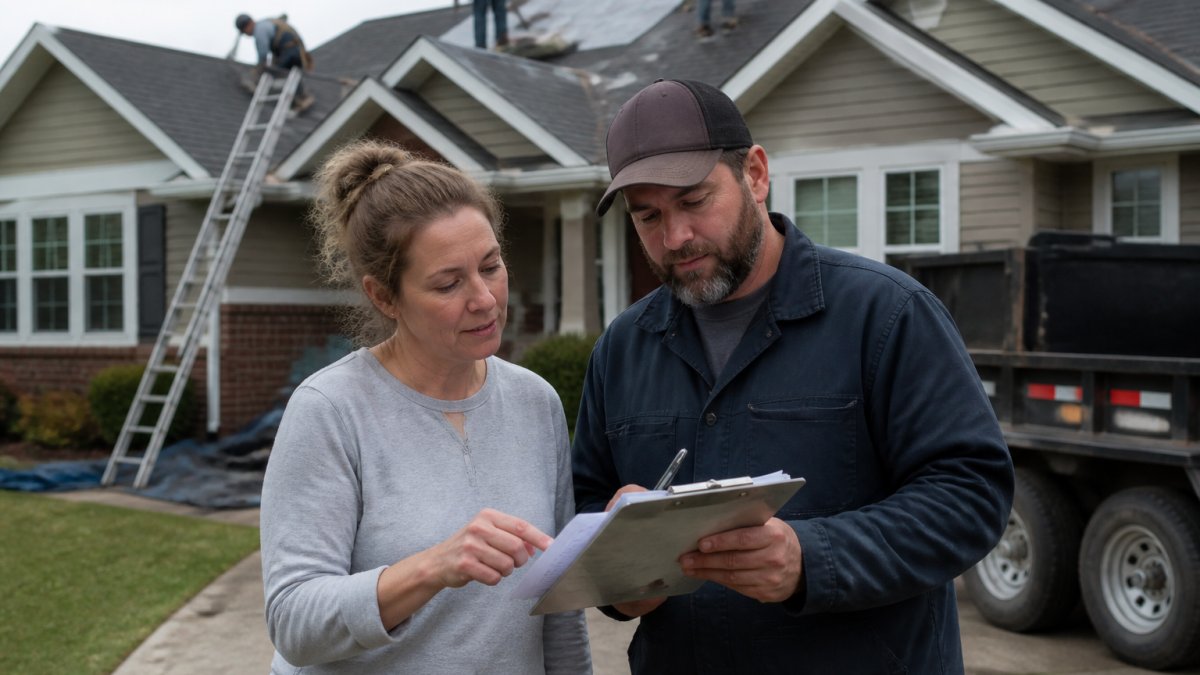
A roofing contractor checklist filters out unqualified roofers before they set foot on your property, most bad hires are avoidable in a ten-minute verification.
Licensing, Insurance, and Manufacturer Certifications
Licensing is the legal authorization to perform roofing work in your state or locality. Liability coverage protects your property if a worker damages your home, while workers' compensation protects you if a crew member is injured.
Manufacturer certifications often determine whether you qualify for the strongest workmanship and material warranties. A contractor certified by a major shingle manufacturer can typically offer enhanced coverage a non-certified roofer cannot.
How to Read Customer Reviews and Ratings
Reviews reveal a roofer's follow-through more than their craftsmanship. Look for patterns, not single complaints:
- Response time mentions. Do reviewers say the company answered calls and returned to fix issues?
- Cleanup comments. A crew that leaves nails in the yard is a crew that cuts corners.
- Recency. A strong reputation from five years ago says little about today's crews.
A company with a few detailed, resolved complaints often outperforms one with only glowing five-star reviews. How a roofer handles a problem is the real test.
Questions to Ask a Roofing Contractor Before You Sign
The right questions reveal whether you are dealing with a professional operation or a sales pitch. Ask these before signing:
- Are you licensed and insured in this state, and can I see the certificates?
- Will you provide a written quote with materials, labor, and timeline itemized?
- Who is my point of contact, and what is your typical response time?
A contractor who hesitates on any of these is telling you something. Professionals answer without friction because they deal with them daily.
Roof Replacement Estimates: What a Fair Quote Includes
A fair roof replacement estimate is a written document, not a number shouted from a ladder. It should itemize materials, labor, and project scope so you can compare bids on equal footing.
Here is what a complete estimate should contain:
| Estimate Element | What to Look For | Why It Matters |
|---|---|---|
| Project scope | Square footage, tear-off, decking repair | Prevents surprise add-ons |
| Materials | Shingle brand, grade, underlayment | Determines lifespan |
| Labor costs | Crew size, timeline | Signals realistic scheduling |
| Warranty terms | Manufacturer and workmanship | Protects your investment |
| Cleanup | Debris removal, magnet sweep | Prevents property damage |
When quotes vary wildly, the difference is almost always what is left out, not the price of shingles. One bid may exclude decking replacement or use thinner underlayment.
Roofing Warranties and Contracts: What You're Actually Covered For
Roofing warranties fall into two categories, and confusing them is a common homeowner mistake. The manufacturer warranty covers the materials; the workmanship warranty covers the installation. A great shingle installed poorly will fail, and the manufacturer will not cover it.
Manufacturer Warranty vs. Workmanship Warranty
| Feature | Manufacturer Warranty | Workmanship Warranty |
|---|---|---|
| Covers | Defects in the shingles, underlayment, or accessories themselves | Errors in how the materials were installed |
| Issued by | The shingle or material manufacturer | The roofing contractor |
| Typical duration | Often limited-lifetime on premium shingles, shorter on economy lines | Commonly 1 to 10 years, set by the contractor |
| Transferable? | Frequently yes, but usually only once and within a set window after installation | Depends entirely on the contractor; many are non-transferable |
| Voided by | Improper installation, poor ventilation, unauthorized repairs | Usually expires if anyone other than the original contractor touches the roof |
| Payout basis | Materials only, prorated in many cases | Labor and sometimes materials, per the contract |
Manufacturer warranty coverage depends on the product line and whether the contractor is certified to offer enhanced terms.
The trap is the gap between the two. If a shingle fails at year eight because it was nailed too high, the manufacturer points to installation and the contractor points to the material. That is why the workmanship warranty is the one to scrutinize hardest, and why its length and transferability should weigh as heavily as price.
What to Verify in the Written Contract
A written contract is the only version of the deal that exists if something goes wrong. Before signing, confirm:
- The exact scope of work, including tear-off, decking replacement, flashing, and ventilation
- The specific products by brand, product line, and color, not just "architectural shingles"
- What the workmanship warranty covers, for how long, and whether it is transferable
Anything not written down is not covered. A verbal "lifetime warranty" promise means nothing if the contract says one year.
Questions That Expose Weak Coverage
Ask each contractor these directly and compare the answers in writing:
- Is the workmanship warranty prorated, and does it cover labor only or labor and materials?
- If you go out of business, who honors the workmanship warranty?
- Will you provide the manufacturer warranty documents before I sign, not after?
A contractor who answers without hesitation is telling you the coverage is real. One who deflects is telling you something too.
Roof Repair vs. Full Replacement: Matching the Service to Your Roof
Roof repair makes sense for isolated damage; full replacement is the right call when the roof is near the end of its service life or damage is widespread. The decision comes down to age, extent of damage, and whether the decking is sound, but the material on your roof and the climate it faces matter just as much.
How Material Choice Changes the Repair-or-Replace Math
Different roofing materials fail in different ways and on different timelines, which changes whether a repair is a real fix or a stopgap.
| Material | Typical Service Life | Common Failure Mode | Repair-Friendly? |
|---|---|---|---|
| Asphalt shingles (3-tab) | About 15 to 20 years | Curling, granule loss, wind lift | Yes, for isolated damage |
| Asphalt shingles (architectural) | About 20 to 30 years | Granule loss, cracked tabs, flashing leaks | Yes, if damage is localized |
| Metal (standing seam) | 40 years or more | Loose fasteners, sealant failure at penetrations | Yes, often panel-by-panel |
| Clay or concrete tile | 50 years or more | Cracked or slipped tiles, broken underlayment | Yes, but underlayment often fails first |
| Wood shakes or shingles | About 25 to 30 years | Rot, splitting, moss, insect damage | Sometimes, but matching aged wood is hard |
| Synthetic slate or composite | 40 to 50 years or more | Rare material failure; flashing and fasteners | Yes, if the product line is still made |
The pattern: on tile, metal, and synthetic roofs, the material often outlasts the underlayment and flashing beneath it, so a "repair" replacing a few tiles may mask a failing underlayment that leaks again within years. On asphalt, the shingle itself is usually the weak point, so localized repairs hold up better.
Climate and Roof Slope as Decision Factors
Where you live and how your roof is built change the calculus:
- High-wind and hail regions. Impact and wind damage tends to be widespread rather than isolated, which pushes the decision toward replacement more often than in calm climates.
- Heavy snow and ice regions. Ice dams form at the eaves and can force water under shingles. If the roof has already leaked from ice damming, the decking and underlayment are often compromised beyond what a surface repair fixes.
- Hot, high-UV regions. Asphalt shingles age faster from sun exposure, so a roof that would last 25 years elsewhere may need replacement sooner.
A Practical Decision Framework
Work through these in order:
- How old is the roof relative to its expected service life? If it is past 75 percent of its lifespan, repairs are usually borrowed time.
- Is the damage isolated or widespread? One slope or one flashing detail is a repair. Multiple slopes, widespread granule loss, or repeated leaks point to replacement.
- Is the decking sound? Soft spots, sagging, or visible rot mean the repair will not last.
- What is the repair cost as a share of replacement? A common rule of thumb is that if a repair costs more than roughly a quarter of a full replacement, replacement is often the better long-term value, though the exact threshold depends on the roof's age and condition.
- How long do you plan to stay? If you are selling soon, a repair may be the right call. If you are staying for years, replacement usually wins on total cost.
Many homeowners ask whether they can wait if the roof is old but not leaking. Waiting is reasonable when an inspection shows the structure is sound and no water is entering. It becomes risky when attic ventilation is poor or the roof has visible soft spots, because interior damage can develop quickly and cost far more than the roof itself.
When a Repair Is the Right Answer
A repair is the better choice when the roof is young, the damage traces to a single cause such as failed flashing or a few storm-lifted shingles, the decking is dry and solid, and the material is one where localized fixes hold up. A targeted repair protects the home without the cost and disruption of a full tear-off, preserving the remaining service life you already paid for.
Insurance Claims, Storm Damage, and Financing Your Project
Storm damage claims follow a defined process, and how you document the damage determines the outcome.
Insurance typically covers sudden damage from hail, wind, or falling debris, while normal wear and aging are the homeowner's responsibility.
Financing closes the gap for homeowners who need the work done now but lack immediate liquidity, letting you spread the cost rather than draining savings.
Conclusion: Choosing Top Rated Residential Roofing Services
The hardest part of hiring a roofer is not finding one, it is trusting the work will hold up years after the crew leaves. Verify credentials, demand written estimates, and read the warranty before you sign.
At Taylor-Made Roofing, we offer quality roofing solutions backed by high-quality workmanship, and we provide flexible financing through the PACE Program, Home Run Financing, and Enhancify so essential home protection fits your budget.
Frequently Asked Questions
How do I find top rated residential roofing services in my area?
Start by asking neighbors and your local building department for names of roofers who have pulled permits recently. Check each company's license status and look for manufacturer certifications from shingle makers. Read customer reviews on Google and the Better Business Bureau, and pay attention to how the company responds to complaints. Get at least three written quotes for the same project scope so you can compare fairly. A top rated residential roofing contractor will offer a free estimate, provide references from local jobs, and carry both liability coverage and workers' compensation insurance.
What questions should I ask a roofing contractor before hiring?
Ask how long the company has worked in your area, whether crews are employees or subcontractors, and who handles cleanup and debris removal. Request the license number, proof of liability coverage, and workers' compensation certificates. Ask what the manufacturer warranty covers and whether it is transferable if you sell. Find out the estimated project timeline, payment schedule, and what happens if weather delays work. Finally, ask for three recent local references and actually call them. A contractor who hesitates on any of these is a warning sign.
How many roof replacement estimates should I get?
Get at least three written estimates for the same scope of work so you can compare labor costs, material costs, and project timelines side by side. Each estimate should list the roofing materials and brand, number of squares, underlayment, flashing, ventilation, and disposal fees. If one quote is dramatically lower, ask what is excluded. If one is much higher, ask what extra value it includes. Three quotes give you a realistic range without dragging the decision out for weeks.
What should a residential roofing estimate include?
A complete estimate should spell out the project scope, including tear-off, decking inspection, underlayment, roofing materials, flashing, vents, and cleanup. It should list the manufacturer and product line for shingles or metal panels, the number of squares, and whether permits are included. Labor costs should be broken out from material costs. Ask whether the price covers replacing damaged decking or only the visible roof surface. Also confirm the payment schedule and whether a deposit is required before work begins.