 How-to
Identifying Hidden Roof Water Damage: 7 Warning Signs
Table of Contents
- Why Hidden Roof Water Damage Hides Until It's Expensive
- The Most Common Signs of a Roof Leak You Can See From Inside
- How to Find a Roof Leak: A Safe Step-by-Step Walkthrough
- Finding a Roof Leak With No Attic Access
- Exterior Clues: Shingles, Flashing, Gutters, and Hidden Storm Damage Roof Problems
- Ruling Out Plumbing and Condensation Before You Call a Roofer
- What to Do the Moment You Confirm Hidden Roof Water Damage
- Frequently Asked Questions
Last Updated: October 17, 2026
Why Hidden Roof Water Damage Hides Until It's Expensive
Water almost never enters a roof through the spot you can see. It enters through a failed flashing joint, a cracked pipe boot, or a hairline seam, then travels along the decking or down a rafter before it finally drips through your ceiling.
So here's how to find the problem before it finds your drywall.
The Most Common Signs of a Roof Leak You Can See From Inside
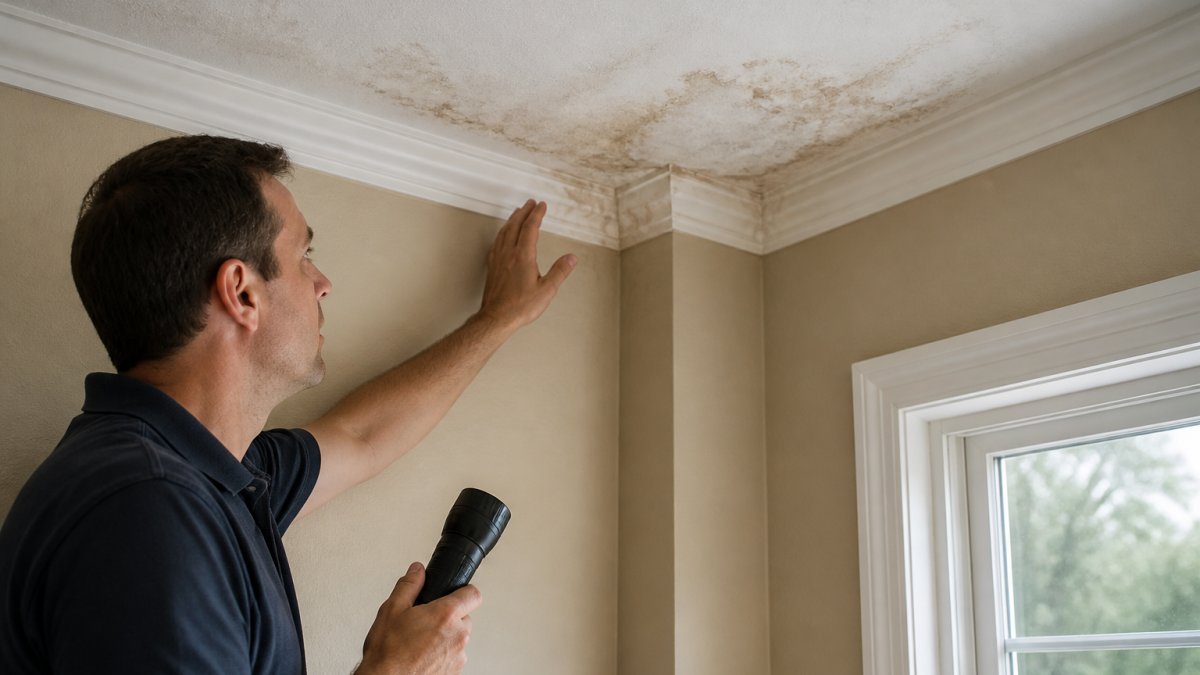
The signs of a roof leak usually show up indoors first, and they're easy to dismiss as "just an old house." Start with a flashlight and a slow walk through every room under the roof.
Look for these interior clues:
- Brown or yellow rings on ceilings and upper walls
- Paint that bubbles, blisters, or peels in one isolated spot
- Wallpaper that lifts or wrinkles near the ceiling line
Ceiling and Wall Stains That Point to Water Intrusion
A water stain is a map. A light yellow ring is usually older and dried out, while a dark brown edge means moisture is still active. Press a finger gently against the stain: if it feels soft or spongy, the drywall behind it has taken on water and needs attention now.
Musty Odors, Peeling Paint, and Bubbling Wallpaper
Smell is often the first warning, and the easiest to ignore. A persistent damp smell in a closet, hallway, or upstairs bedroom points to moisture trapped in insulation or framing. Peeling paint and bubbling wallpaper are the same story in visual form. Paint loses its grip when the surface behind it stays wet, so bubbling is a structural hint, not a cosmetic one.
How to Find a Roof Leak: A Safe Step-by-Step Walkthrough
The safest way to find a roof leak is to work from the attic down, not from the roof up. Most leaks can be traced without stepping onto shingles, keeping you off a surface you may not be trained to walk.
Step 1: Set Up the Test Before You Go Looking
Pick a steady rain day, or have someone run a garden hose on the suspect area from outside while you watch from inside. Run the water low and slow for 15 to 20 minutes in one spot, then move it; a fast, high-pressure spray splashes everywhere and tells you nothing. Have a phone or notepad ready before the water starts, because the path reveals itself in minutes.
Step 2: Walk the Interior Rooms Under the Roof
Start inside with a bright flashlight and check every ceiling and upper wall under the roof plane. Note the location, size, and color of each stain, and press a finger gently against it: if it feels soft or spongy, the drywall behind it has taken on water and needs attention now.
Step 3: Enter the Attic and Scan the Deck Underside
With a bright flashlight, scan the underside of the roof deck for dark streaks, sagging, or wet insulation. Work from the attic access point toward the ridge and along the rafters, since water follows the framing. Check the framing around chimneys, vents, and pipe penetrations first, then look for compressed, dark, or damp insulation that shows where water has pooled.
Step 4: Measure Moisture Instead of Guessing
A stain that looks dry can still be wet behind the paint. A pin-type moisture meter, available at most hardware stores for under $50, gives you a reading instead of an opinion. Press the pins into the drywall, wood framing, and insulation at each suspect spot and record the reading; above roughly 20 percent on wood framing indicates active moisture that needs a professional look.
Step 5: Document the Evidence
Photograph every stain, drip, and moisture reading, and note the date, the weather, and whether the spot grew after rain. Measure the stain at its widest point. This record shows a roofer whether the leak is active or old, supports an insurance claim, and proves the damage was not pre-existing if you sell. Keep the photos and notes in one folder on your phone.
Step 6: Match the Interior Spot to the Exterior Surface
Once you have located moisture inside, go outside and match that spot to the roof surface directly above it, using binoculars from the ground rather than climbing. Look for lifted flashing, a cracked pipe boot, a missing shingle, or an open seam. If the interior spot sits several feet from the exterior clue, that is normal: water travels along the decking before it drips, so trace backward toward the roof surface.
Finding a Roof Leak With No Attic Access
A roof leak with no attic access is harder to trace, but not impossible. Homes with vaulted or cathedral ceilings or flat roof sections often have no crawl space to inspect, so you rely on interior patterns and exterior clues instead.
Start with the stain itself. Note which direction it spreads and whether it grows after heavy rain or wind-driven storms.
Exterior Clues: Shingles, Flashing, Gutters, and Hidden Storm Damage Roof Problems
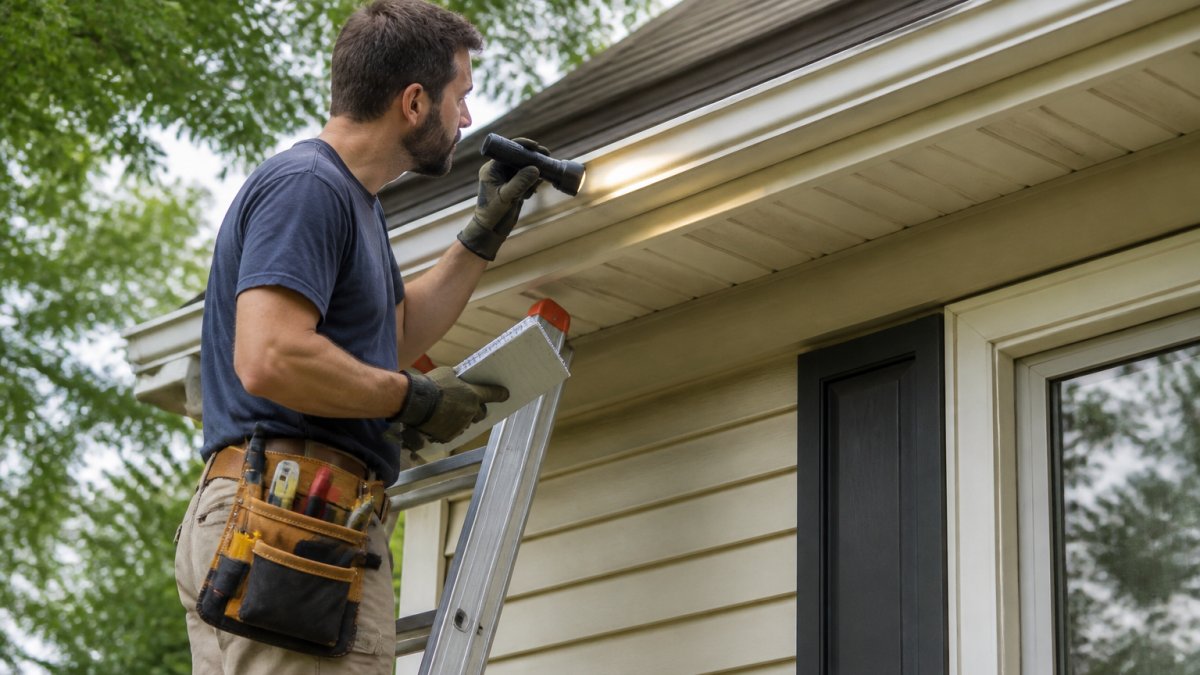
The roof surface tells you what the ceiling can't. Grab binoculars and walk the perimeter of your home from the ground. You're looking for small failures that let water in long before they look dramatic.
Shingle Cracks, Curling, and Missing Pieces
Shingles fail in predictable ways. Look for edges that curl upward, cracks across the surface, granules collecting in gutters, and shingles that are simply gone. A single missing shingle after a storm is a small repair; left alone, the exposed underlayment and decking underneath become the real problem.
Flashing, Vents, and Gutter Drainage Failures
Flashing is the metal that seals the joints where your roof meets chimneys, walls, and vents. When it lifts, cracks, or pulls away, water gets a straight path inside, so check the flashing around your chimney and every roof penetration. Then look at your gutters and downspouts: sagging gutters, debris clogs, and downspouts that dump water at the foundation all push moisture back toward the house.
Ruling Out Plumbing and Condensation Before You Call a Roofer
Not every ceiling stain is a roof leak. Before you assume the worst, rule out the two imposters: plumbing and condensation. The table below is the symptom-to-source guide most roofing and restoration practitioners use.
| Symptom | Most likely source | What to check next |
|---|---|---|
| Stain grows only after rain or storms | Roof leak | Attic deck, flashing, and roof penetrations above the stain |
| Stain grows steadily, rain or shine | Plumbing leak | Nearest bathroom, kitchen, or laundry supply and drain lines |
| Dampness in a closet, attic corner, or around a bathroom fan | Condensation | Ventilation, insulation, and the humidity level in the home |
| Stain near a chimney or vent | Flashing failure | The metal flashing and sealant at that penetration |
| Stain along a rafter line | Roof leak tracking along framing | The roof surface directly above the rafter |
| Musty smell that clears with ventilation and returns | Condensation or high indoor humidity | Bathroom and kitchen exhaust fans, attic ventilation |
Plumbing Leaks: Steady, Not Weather-Driven
Plumbing leaks usually sit near a bathroom, kitchen, or laundry and show up steadily, rain or shine. A supply-line leak tends to be constant and small; a drain leak appears when the fixture is used. If the stain is directly below a fixture and grows on a dry day, shut off the water to that fixture and call a plumber first.
Condensation: Warm Air Meeting a Cold Surface
Condensation forms when warm, moist indoor air hits a cold surface, and it tends to appear in poorly ventilated spots like attic corners or around bathroom fans, especially in winter. A simple test: hold a hygrometer, available at most hardware stores for under $20, in the room for an hour. Indoor relative humidity above roughly 50 percent in cold weather makes condensation a strong suspect, and improving ventilation and sealing air leaks often solves it without any roof work.
Roof Leaks: Weather-Driven and Tracking Along Framing
A roof leak, by contrast, gets worse after rain and often tracks along a rafter line. It may appear in one spot during a light rain and a different spot during a wind-driven storm.
Ask yourself three questions:
- Does the stain grow only after rain or storms?
- Is it near a plumbing fixture or a vent?
- Does the attic smell damp even in dry weather?
If the first is yes, you likely have water intrusion from the roof. If the second, call a plumber first. If the attic smells damp in dry weather, condensation or a slow roof leak is likely, and a moisture meter reading will tell you which.
What to Do the Moment You Confirm Hidden Roof Water Damage
Once you've confirmed hidden roof water damage, act in this order. Speed matters more than perfection here.
- Contain the water. Place a bucket under active drips and move furniture and electronics clear.
- Document everything. Photos and notes of every stain, drip, and damaged item help with insurance.
- Stop the source if you safely can. A tarp over the affected area buys time until a pro arrives.
This is where Taylor-Made Roofing can help. If a full replacement is needed, we offer flexible financing through the PACE Program, Home Run Financing, and Enhancify, so a sudden repair doesn't have to wait on your savings. You get quality workmanship and a payment path that fits your budget.
Frequently Asked Questions
How do I know I have a roof leak?
The clearest signs of a roof leak are brown or yellow ceiling stains, musty odors in upstairs rooms, peeling paint, and bubbling wallpaper. Check the attic for damp insulation or dark streaks on rafters. On the exterior, look for cracked or curling shingles, damaged flashing around chimneys and vents, and gutters pulling away from the fascia. Hidden roof water damage often starts small and spreads through the decking before a stain appears, so document anything suspicious with photos and dates.
How do I find a roof leak with no attic access?
Without attic access, work from the interior and exterior. Trace ceiling stains upward to the highest point and note where they sit relative to chimneys, vents, and roof valleys. Use a hose test on a dry day, spraying one area at a time while a helper watches inside. Check the exterior for flashing gaps, missing shingles, and sagging gutters. If you cannot isolate the source, a professional roof inspection with moisture meters is the fastest way to confirm hidden roof water damage.
Will homeowners insurance pay for a leaky roof?
Coverage depends on the cause. Most policies cover sudden damage from storms, wind, or hail, but not wear and tear or long-term neglect. If hidden storm damage roof issues went unreported for months, the insurer may treat it as maintenance. Document the date you found the leak, take photos, and keep receipts for temporary repairs. Review your policy or call your agent before filing so you understand your deductible and what the adjuster will inspect.
How soon should I address a suspected roof leak?
Address it immediately. A small leak can rot decking, soak insulation, and grow mold within weeks. Place a bucket under active drips, move valuables, and photograph everything. Call a roofer for an inspection rather than waiting for the next storm. Early detection keeps repairs small and protects structural damage from spreading. If financing is a concern, ask about programs like PACE, Home Run Financing, or Enhancify before the problem grows into a full replacement.
A hidden leak rarely stays small. Every week you wait, water keeps spreading through decking, insulation, and framing, and the repair grows with it. If you've spotted the warning signs in this guide, don't wait for the ceiling to sag. Contact Taylor-Made Roofing for a professional roof inspection, and we'll find the source, explain your options, and help you protect your home with financing that works for you.