 Listicle
Why Professional Roof Maintenance Pays Off for Homeowners
Last Updated: November 7, 2026
Quick Summary
Professional roof maintenance is the scheduled inspection and care of your roof's surface, flashing, drainage, and ventilation to catch small problems before they become expensive ones. Most roofs should be inspected once a year, with an extra check after any major storm. A written report documents your roof's condition for warranty claims, insurance questions, and proof of maintenance if you sell.
- Late fall is ideal for inspection because you clear debris before winter loads the roof.
- Repair isolated damage if the roof is under roughly two-thirds of its expected service life.
- A maintenance visit has three cost components: inspection, routine service, and any quoted repairs.
- Ask for a written scope separating inspection, service work, and repairs before comparing prices.
- Verify licensing, insurance, and a written scope before booking any contractor.
Table of Contents
- Why Professional Roof Maintenance Protects Your Home
- What a Professional Roof Inspection Actually Covers
- How Often to Inspect a Roof: A Schedule by Material and Season
- Your Roof Maintenance Checklist: What Gets Checked and Why
- Roof Repair vs. Replacement: How Maintenance Shapes the Decision
- Residential vs. Commercial Roof Maintenance Needs
- Maintenance Costs, Service Plans, and What You Get Back
- Scheduling Your First Professional Roof Maintenance Visit
- Frequently Asked Questions
Why Professional Roof Maintenance Protects Your Home
Your roof takes more abuse than any other part of your house, and it rarely announces when something is wrong. Professional roof maintenance is the scheduled inspection and care of your roof's surface, flashing, drainage, and ventilation to catch small problems before they become expensive ones. A minor lifted shingle or clogged downspout can turn into rotted decking and stained ceilings within a season or two.
The logic is simple. Water always finds the weak point. A cracked bead of sealant around a vent pipe lets in a trickle that soaks insulation, warps drywall, and feeds mold in the attic. Our guide on identifying hidden roof water damage covers the warning signs to watch for. A gutter packed with leaves backs water up under the shingle course and rots the fascia board behind it.
Early detection is the whole game. Roof damage rarely appears all at once, and the subtle signs (a granule trail in the gutter, a faint brown ring on the ceiling) are exactly the ones a trained eye catches during a routine visit.
Skipping maintenance because "it's not leaking yet" is a common mistake. By the time a leak shows up indoors, moisture intrusion may have been working for some time.
What a Professional Roof Inspection Actually Covers
A professional roof inspection is generally a top-to-bottom assessment of the roof surface, penetrations, edges, and drainage system. Ask any provider what their inspection includes before you book.
A thorough roof inspection generally covers the areas below.
- Roof surface walk, when safe. A roof surface check looks at shingle condition, granule loss, lifted or missing pieces, and whether shingle courses are aligned.
- Flashing at every penetration and edge. Flashing is the metal or membrane that seals the roof where it meets chimneys, skylights, vents, and wall intersections. Flashing details are commonly a source of leaks, so they are worth checking closely.
- Gutters and downspouts. The check is for granule buildup, sagging, loose hangers, and whether downspouts discharge water away from the foundation. A gutter that backs up under the shingle course is a common path to fascia rot.
- Attic interior. Inside the attic, the technician looks for moisture intrusion, staining on the sheathing, damp insulation, and daylight at penetrations. Checking the attic can reveal moisture problems that are not yet visible on the roof surface.
- Ventilation and insulation. Intake and exhaust vents are checked for blockage, and insulation is checked for compression or moisture. Poor ventilation traps heat and moisture, which shortens shingle life and feeds attic mold.
- Documentation. Every finding is photographed and noted in a written report, with a clear split between what needs prompt repair and what can wait.
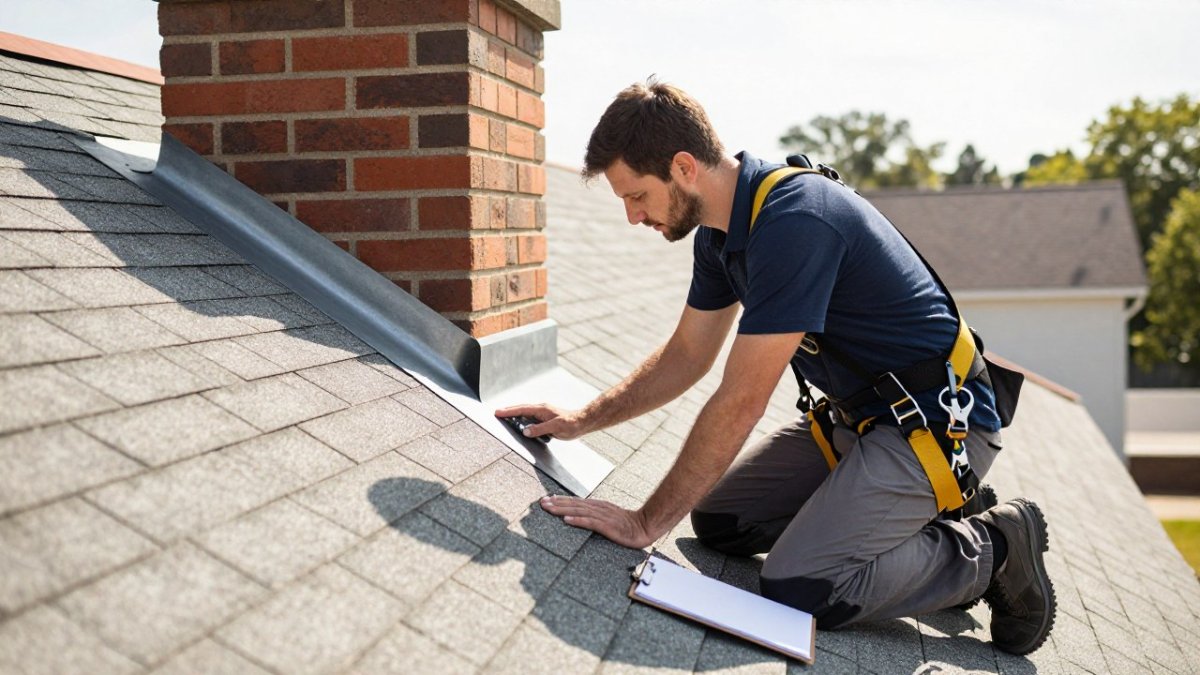
The documentation matters as much as the inspection. A written record of your roof's condition can help with warranty claims, insurance questions, and proof of maintenance if you sell. Ask any provider for a written report and keep it with your home records.
When comparing providers, a visit that skips the attic or produces no written report may be only a surface check.
How Often to Inspect a Roof: A Schedule by Material and Season
Most roofs should be inspected once a year, with an extra check after any major storm. The right frequency depends on your roofing materials and where you live.
| Roof Type | Routine Inspection | Extra Checks |
|---|---|---|
| Asphalt shingle | Once a year | After hail or high wind |
| Metal | Every 1-2 years | After severe storms; check fasteners |
| Tile | Every 1-2 years | After freezes; check for cracked tiles |
| Wood shake | Every year | Twice yearly in wet climates |
Season timing matters too. Late fall is ideal in most of the country, because you clear debris before winter and catch problems before snow and ice load the roof. Spring is the second-best window, letting you spot storm damage from winter.
If you're unsure how often to inspect a roof on your specific home, a professional can set a schedule based on age, material, and tree cover.
Your Roof Maintenance Checklist: What Gets Checked and Why
A roof maintenance checklist keeps nothing to memory. Here's the core list we work through on a routine visit:
- Shingle damage: cracked, curled, or missing shingles and bare spots from granule loss
- Flashing: sealant and metal condition at every penetration and edge
- Gutters and downspouts: clear of debris, firmly attached, draining away from the foundation
- Drainage: no ponding or standing water on flat sections
- Roof ventilation: intake and exhaust working, no blocked soffit vents
- Insulation: dry, intact, and not compressed
- Attic moisture: staining, damp sheathing, or musty smells
- Sealant and boots: pipe boots and caulk lines intact
- Debris and pest prevention: no nests, no trapped branches or leaves
Recurring leaks deserve special attention. If water keeps coming back in the same spot, the fix is rarely more sealant. It's finding the source, whether that's a failed boot, a nail pop, or a valley that drains wrong. Our guide on how to fix recurring roof leaks for good walks through how that diagnosis works.
Roof Repair vs. Replacement: How Maintenance Shapes the Decision
Maintenance doesn't just prevent damage. It gives you the information to make the repair-versus-replacement call on your terms instead of in a panic after a storm.
Here's the practical rule we give homeowners. Repair it if the damage is isolated, the roof is under roughly two-thirds of its expected service life, and the underlying decking is sound. Replace it if shingles are failing across multiple slopes, if repairs keep landing in the same area, or if the roof is near the end of its service life and you're facing a major repair anyway.
A maintained roof also protects your property value and curb appeal. A buyer's inspector will note a roof in poor condition, and unresolved issues can stall a sale or force a credit at closing. If you want to know what failing looks like, our breakdown of the warning signs your roof needs replacing covers the eight signals that point toward replacement rather than another patch.
Residential vs. Commercial Roof Maintenance Needs
Residential and commercial roofs share the same enemies (water, sun, debris) but differ in how you maintain them.
Residential roofing usually means steep-slope shingle or tile, inspected on foot and repaired in small sections. Commercial roofing is often flat or low-slope membrane, where drainage, ponding water, and seam condition drive most problems, and inspections focus on the membrane surface and roof drains.
The schedule differs too. A busy commercial building may need checks twice a year plus after storms, because a leak over a sales floor or office disrupts business, not just comfort. Homes generally do fine on an annual visit with storm follow-ups.
Maintenance Costs, Service Plans, and What You Get Back
Pricing for roof maintenance depends on roof size, pitch, material, and how much repair work turns up. For current pricing or a quote, contact Taylor-Made Roofing through its website. What you can do is understand the structure of the cost and what a plan is actually buying, so you can compare providers on the same basis.
A maintenance visit typically has three cost components. The first is the inspection itself, which scales with roof size and complexity: a simple gable roof is faster to walk than a cut-up roof with multiple valleys, dormers, and skylights. The second is routine service included in the visit, such as clearing gutters, resealing minor flashing details, and replacing worn pipe boots. The third is any repair the inspection turns up, which should be quoted separately and in writing before work starts.
Some providers offer service plans that bundle inspections and minor maintenance. Confirm what any plan includes before you commit. The return is easiest to see in avoided costs. A pipe boot that costs little to replace during a routine visit can, if ignored, let water into the decking and insulation, and the resulting repair involves carpentry and interior work rather than a single fitting. The same pattern holds for a clogged downspout that backs water under a shingle course.
A documented condition history can help you plan a replacement on your schedule instead of reacting to a failure, and can support warranty and insurance conversations.
If you're weighing maintenance against a repair bill, it helps to see how repair costs are built. Our article on what a roof repair cost estimate runs breaks down the cost factors so you can compare a plan's price against the repairs it may prevent. And if a repair bill is the obstacle, ask about financing. Taylor-Made Roofing offers financing options including the PACE Program, Home Run Financing, and Enhancify.
Watch out: a plan that promises "free inspections" but credits the fee only toward a large repair is a sales arrangement, not maintenance. Read what is included in the visit itself before you compare prices.
Scheduling Your First Professional Roof Maintenance Visit
The best time to book is before you have a problem. Call when you notice subtle signs (granules in the gutter, a ceiling stain, a shingle on the lawn), or simply when it's been more than a year since anyone looked.
Before you book, verify any contractor. Ask for proof of licensing and insurance, a written scope of what the visit covers, and a clear report afterward.
If you'd like to know exactly what happens on the day, read our guide on what to expect from a professional roof inspection. Then call Taylor-Made Roofing to schedule your first visit. A professional visit can assess your roof, document its condition, and separate urgent repairs from items that can wait.
Your roof is the one system that protects everything under it, and it deserves more than a reaction after a leak. Taylor-Made Roofing provides professional roof inspections and maintenance built around high-quality workmanship, with flexible financing through the PACE Program, Home Run Financing, and Enhancify when repairs are needed. Get started with Taylor-Made Roofing and secure your shelter before the next storm finds the weak spot.
Frequently Asked Questions
How often should roof maintenance be done?
Most homes need a professional roof inspection once a year, ideally in spring or fall, plus a check after any major storm. Roofs with asphalt shingles generally hold up well on an annual schedule, while flat or low-slope commercial roofs often need twice-yearly visits because drainage and membrane seams wear faster. If your roof is past the 15-year mark or you have large trees overhead, ask about a more frequent schedule. Regular visits catch small issues before they turn into leaks.
What does professional roof maintenance include?
A typical roof maintenance visit generally covers a roof inspection, clearing gutters and downspouts, checking flashing around chimneys and vents, and looking for shingle damage, cracked sealant, or moisture intrusion. Ask any provider what their visit includes and whether you will receive a written report.
Can regular roof maintenance extend a roof's lifespan?
Yes. Catching shingle damage, flashing failures, and drainage problems early keeps water from reaching the decking and insulation, which is where the real damage happens. Maintenance can help a roof reach its expected service life instead of failing early. It can also help preserve curb appeal and property value.
How do I decide between roof repair vs. replacement?
The decision usually comes down to age, extent of damage, and how many problem areas show up. A roof in its first half of expected service life with isolated shingle damage or flashing issues is typically a repair candidate. Widespread granule loss, sagging, repeated leaks, or a roof near the end of its service life points toward replacement. A professional inspection can provide roof condition information to help inform that decision.