 Ultimate guide
How Much Does a Roof Repair Cost Estimate in 2026 Run?
Last Updated: October 25, 2026
Quick Summary
A roof repair cost in 2026 typically ranges from $250 to $3,000 or more depending on the repair type, with leak repair at $300-$1,200 and storm damage at $500-$3,000+. Every estimate should itemize materials, labor, disposal, permits, and exclusions so you can compare bids line by line. Never pay for a written estimate, and always compare at least two bids on scope rather than total price.
- Shingle damage runs $250-$900, while flashing repair runs $350-$1,500.
- Decking repair costs $400-$2,500 and should carry a per-sheet allowance for hidden rot.
- Labor and access usually make up the larger share of a small repair's price.
- Compare repair and replacement on cost per year of service, not sticker price.
- Document damage with dated photos before calling anyone, since adjusters work from evidence.
Table of Contents
- What a Roofing Repair Cost Estimate in 2026 Actually Covers
- Roof Repair Cost by Type: What Drives the Price of Each Job
- How to Read a Roof Repair Estimate Without Getting Burned
- Roof Repair vs. Replacement Cost: When Patching Stops Making Sense
- Emergency Roof Repair Cost: What You Pay for Speed
- Insurance, Deductibles, and Your Out-of-Pocket Share
- Requesting Your Own Written Roof Repair Estimate
- Frequently Asked Questions
What a Roofing Repair Cost Estimate in 2026 Actually Covers
A roofing repair cost estimate in 2026 is a written, itemized breakdown of what a specific repair will take: materials, labor, disposal, and the conditions that change the price. An estimate is only as good as the detail behind it.
A roof repair cost estimate is a documented scope of work that prices each component of a repair separately, so you can compare bids line by line instead of guessing which lump sum is fair. The estimate should also state what is excluded, because the exclusions are where budgets quietly break.
Line Items You Should See on Every Estimate
- Material quantities by roofing square, not vague "shingles"
- Labor hours and crew size
- Underlayment and flashing listed separately from shingles
- Decking repair allowance per sheet of plywood
- Disposal and dumpster fees
- Permit costs, if the jurisdiction requires one
- Exclusions: what the price does not cover
If a bid arrives as one line and one number, ask for the breakdown before you sign anything. The FTC guidance on home improvement contracts is worth a read before you commit to any contractor.
Roof Repair Cost by Type: What Drives the Price of Each Job
Each repair type carries its own cost structure, and understanding that structure is how you spot an inflated bid.
| Repair Type | Typical Scope | Typical 2026 Price Range | Main Cost Drivers | Urgency |
|---|---|---|---|---|
| Roof leak repair | Locate and seal breach | $300-$1,200 | Leak detection, access, water damage | High |
| Shingle damage (field) | Replace damaged field shingles | $250-$900 | Matching shingles, roof pitch | Medium |
| Flashing repair | Reseal or replace metal flashing | $350-$1,500 | Chimney and wall detail complexity | Medium |
| Storm damage (wind/hail) | Wind and hail repair | $500-$3,000+ | Insurance scope, documentation | High |
| Decking repair | Replace rotted sheathing | $400-$2,500 | Extent of hidden rot | High |
| Ridge/valley repair | Rebuild ridge cap or valley | $500-$2,000 | Detail labor, underlayment | Medium |
| Soffit/fascia repair | Repair roof-edge wood and trim | $300-$1,500 | Rot extent, paint/match | Low-Medium |
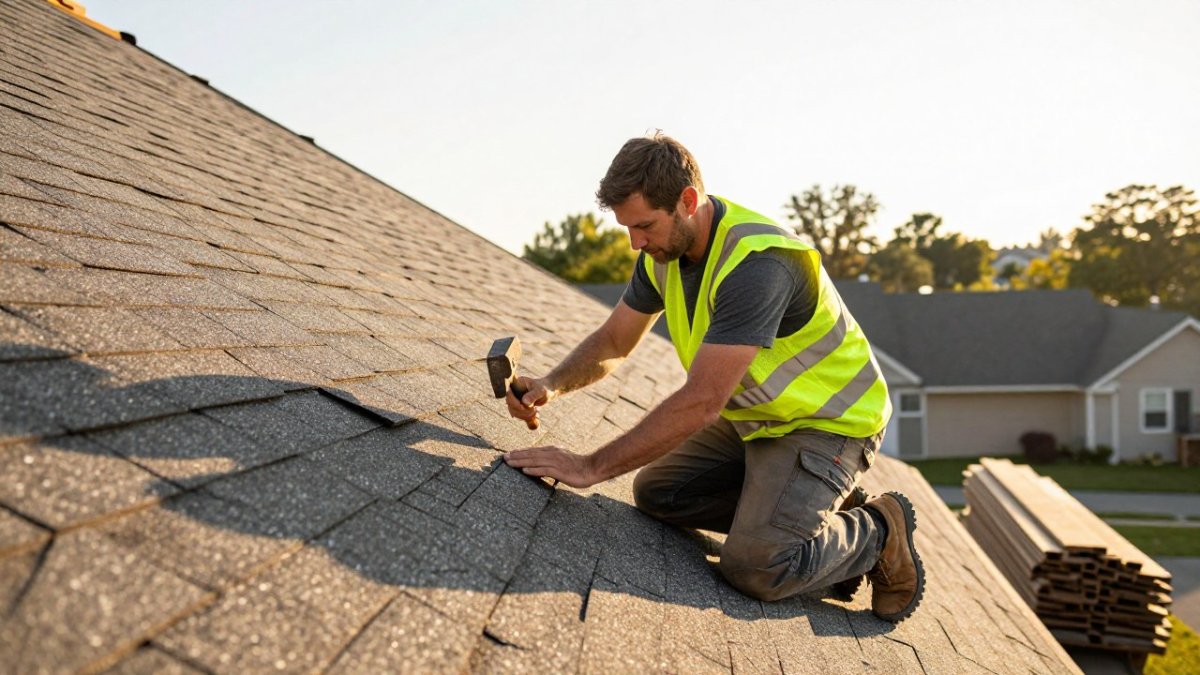
Shingle damage pricing hinges on whether the shingles can be matched.
Flashing repair is detail work. Chimney flashings, step flashing, and valley metal all require careful labor, and that labor is the cost.
Storm damage is where documentation matters most. You need photos, dates, and a scope an adjuster will accept.
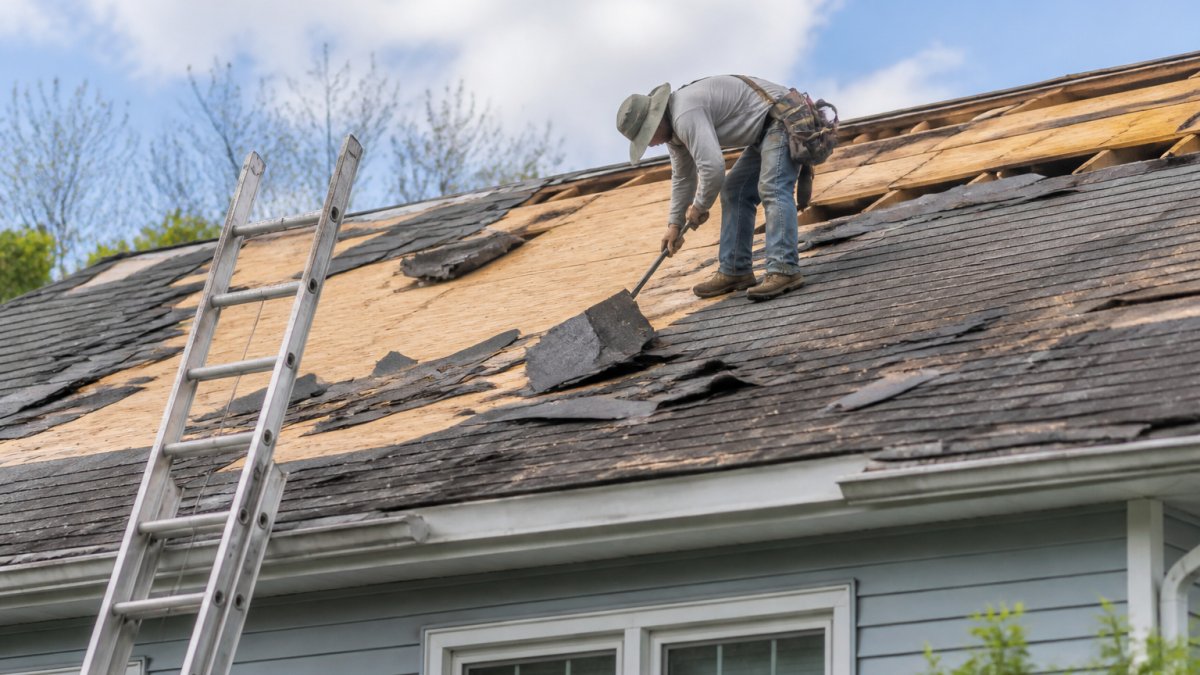
Decking repair is the wildcard.
Labor and material split. Across these repair types, a useful rule of thumb is that labor and access typically make up the larger share of a small repair, while materials dominate on larger scopes. That is why two bids for the "same" leak can differ by hundreds of dollars: one crew prices a two-hour diagnostic and a targeted patch, the other prices a half-day with a full flashing rebuild. Neither is automatically wrong, but the scope has to say which one you are buying.
What moves the number most. Roof pitch and stories drive access cost (steep-slope and two-story work carries a premium).
How to Read a Roof Repair Estimate Without Getting Burned
The biggest mistake homeowners make is comparing bottom-line totals. Two bids can differ by thousands and neither is dishonest, because they may describe completely different scopes.
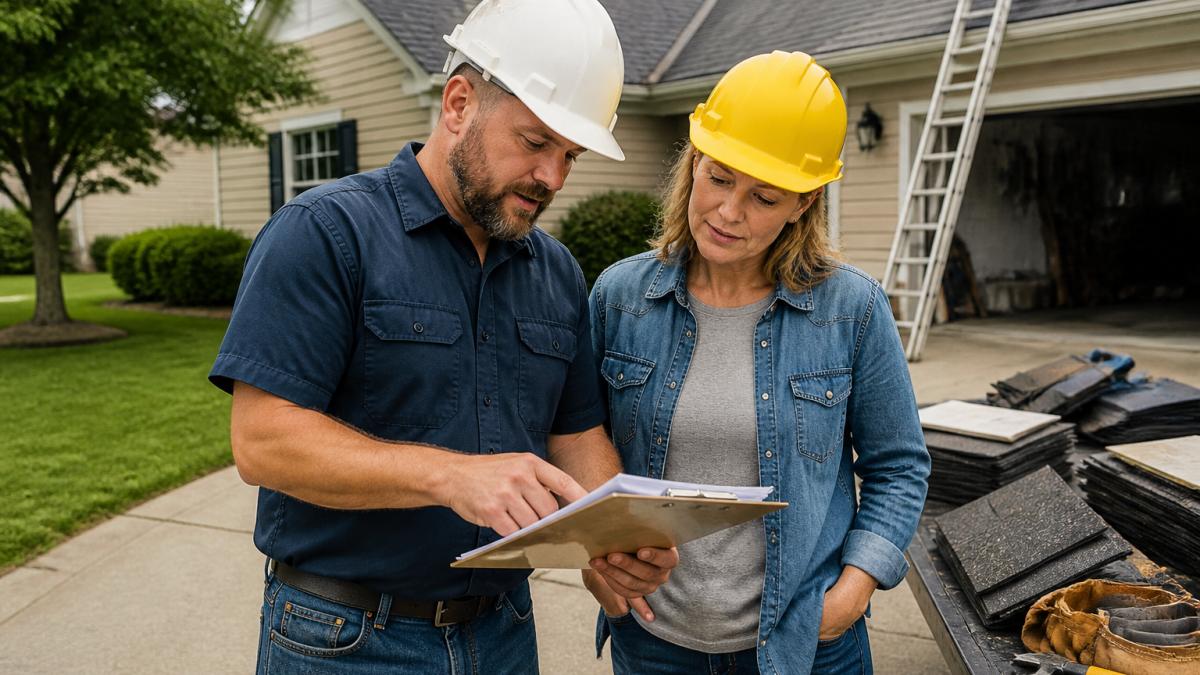
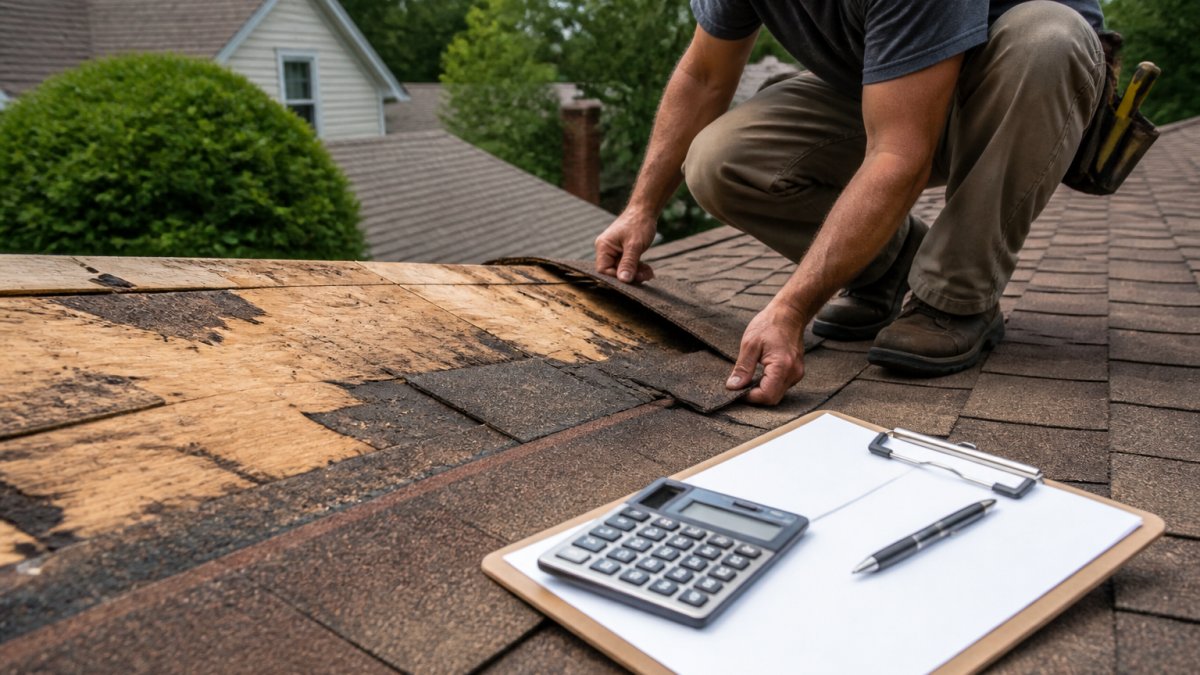
Read the scope first, the price second. Check whether both bids include the same flashing work, the same underlayment, and the same disposal.
Watch out: a bid that lists materials but no labor hours, or labor but no quantities, is hiding something. Ask for the missing piece in writing.
Our guide to avoiding roofing repair scams covers the red flags in detail, including pressure tactics, cash-only demands, and contractors who want a large deposit before any material arrives.
Roof Repair vs. Replacement Cost: When Patching Stops Making Sense
Replacement wins when the roof is near the end of its service life or damage covers a large share of the surface. Repair wins when the problem is isolated and the rest of the system is sound. The hard part is turning that principle into a number, so here is the decision framework we actually use.
The Three Tests
1. Remaining service life. Asphalt shingle roofs commonly carry a 20- to 30-year expected service life depending on product line.
2. Damage concentration. Isolated damage, one vent boot, one chimney flashing, a handful of shingles, is repair territory. Damage spread across multiple slopes, valleys, or the whole field points to a system-wide failure that patching cannot fix.
3. Repeat history. One leak is an event. Three leaks in three seasons in three different places is a pattern.
The Repair-to-Replacement Ratio
A common practitioner rule of thumb: when a single repair is quoted at a substantial fraction of a full replacement, and the roof is already aged, the repair is poor value. The exact cutoff varies by roof and budget, but the logic is simple.
Run the comparison on a per-year basis, not a per-job basis. Divide the repair price by the years it realistically buys you, and compare that to the replacement price divided by the years a new roof gives you.
What the Comparison Should Include
A fair repair-vs-replace comparison prices the same scope on both sides:
- Repair side: the repair itself, plus any interior water damage, plus the likelihood of a follow-on repair in the next few years.
- Replacement side: tear-off, disposal, decking allowance, underlayment, flashing, vents, permits, and any upgrades (ice and water shield, ridge ventilation).
- Both sides: warranty value. A new roof typically carries a manufacturer material warranty plus a workmanship warranty; a patch usually carries a limited workmanship warranty at best.
If you are weighing the two, contact us for a comprehensive comparison and quote. You can also review average roof replacement costs to compare real figures against your repair quote.
When Repair Is Clearly Right
- The roof is young relative to its expected service life.
- Damage is isolated to one detail (flashing, vent, one slope).
- The underlying decking is sound and the underlayment is intact.
- The repair restores the roof to its prior condition rather than patching around a known failure.
When Replacement Is Clearly Right
- The roof is at or past its expected service life.
- Damage covers a large share of the roof surface or multiple slopes.
- Decking or structural issues extend beyond an isolated area.
- You are facing a second or third repair in as many years.
- You plan to sell the home and a buyer's inspector will flag the roof.
The honest answer is that some roofs sit in the middle, and the right call depends on your budget and how long you plan to stay. Ask the contractor to quote both, a repair estimate and a replacement estimate, so you can compare real numbers instead of rules of thumb.
Emergency Roof Repair Cost: What You Pay for Speed
Emergency roof repair costs more than scheduled work, and the premium is for speed, not better materials. After-hours callouts, temporary tarping, and same-day crews all carry a scheduling surcharge.
You are paying for three things: immediate water exclusion, documentation for insurance, and a crew willing to work in poor conditions. A tarp today often prevents thousands in interior damage tomorrow.
If water is actively entering your home, contact us for emergency roof repair services.
Insurance, Deductibles, and Your Out-of-Pocket Share
Insurance covers sudden damage, not wear and tear. That distinction decides most claims before an adjuster ever climbs the ladder.
Your out-of-pocket share is the deductible plus anything the policy excludes. Document the damage before you call anyone: dated photos, a written description of when you noticed it, and any receipts for temporary protection. Adjusters work from evidence.
One insider point most guides miss: the contractor's scope and the adjuster's scope are separate documents. A good contractor writes the estimate to match insurance terminology so the two can be reconciled.
Requesting Your Own Written Roof Repair Estimate
Requesting a written estimate is straightforward, and you should never pay for one. Here is the sequence we recommend:
- Document the damage with dated photos from the ground and inside the attic.
- Note the symptoms: stains, granules in gutters, daylight through the deck.
- Book an inspection so the scope is based on the actual roof, not a description.
- Ask for the itemized estimate in writing, including exclusions.
- Compare at least two bids line by line, not total to total.
- Confirm licensing and insurance before any work begins.
- Get the warranty terms in the contract, not verbal.
A professional inspection is what turns a guess into a real number. You can book a professional roof inspection and see exactly what the process covers before anyone quotes you a figure. You can contact us to book a professional roof inspection and see exactly what the process covers before anyone quotes you a figure.
Frequently Asked Questions
How much does roof repair cost in 2026?
There is no single national figure because a roof repair cost depends on the damage type, roof size, pitch, material, and local labor rates. Minor shingle or flashing repairs sit at the low end, while structural decking work or full section tear-offs push toward replacement-level pricing. The most reliable number comes from a written, itemized estimate after an on-site inspection. Ask for labor and material lines separately so you can compare bids fairly.
What factors affect a roof repair estimate the most?
Roof size and pitch, accessibility, the material being matched, the extent of water damage under the shingles, and whether decking or underlayment needs replacement. A steep two-story roof with limited access takes more labor hours than a low-slope single-story roof. Storm damage that has spread into flashing or structural damage raises the scope. Get the contractor to state which factors are driving your number so you know what could change.
Does homeowners insurance cover roof repairs?
Most policies cover sudden damage from storms, hail, or falling objects, but not wear and tear or neglect. Your deductible applies, and many policies use actual cash value rather than replacement cost for older roofs, which lowers the payout. Document the damage with photos before anyone touches the roof, file the claim promptly, and get the adjuster's scope in writing. Read your policy's roof-specific exclusions before assuming you are covered.
How can I tell whether my roof needs repair or replacement?
Age is the first check: asphalt shingles typically last 20 to 25 years, so a roof past that mark with widespread granule loss, curling, or multiple leaks usually favors replacement. Isolated damage on a younger roof, such as a few lifted shingles or a failed flashing detail, is a repair. If repairs exceed roughly a third of replacement cost, or leaks keep returning in different spots, replacement usually wins on total cost.
How do I compare roofing repair estimates fairly?
Compare scope, not just the bottom line. Two bids for the same leak can differ because one includes new underlayment and decking inspection and the other patches over the problem. Ask each contractor to list materials by type and quantity, labor hours, disposal, and warranty terms. Check licensing and insurance, and be wary of a bid that is dramatically lower with no written scope. Three itemized bids give you a real range.
Roof repairs rarely get cheaper with time, and the damage behind a small leak is usually larger than the leak itself. Taylor-Made Roofing provides professional roofing solutions built to secure your shelter, backed by flexible financing through the PACE Program, Home Run Financing, and Enhancify so essential protection stays within reach. Get started with Taylor-Made Roofing and turn an uncertain repair into a documented, financed plan.